


- AI-personalized cold emails still get ignored when a first name and one scraped detail pass for personalization, a template wearing a costume that prospects can spot within a sentence.
- The real fix is real context: what a company does, what changed recently, and who to reach, pulled from one source instead of a single scraped headline.
- Vibe Prospecting looks up that context right inside Claude or ChatGPT chat, no separate database and no manual scraping required.
- A five-line email beats a five-hundred-word one, and one clear next step beats a bare scheduling link.
- Deliverability is half the problem. A well-written email sent from an unwarmed mailbox never reaches an inbox at all.
- Test the pattern on a handful of accounts for free before scaling to hundreds, so a bad message never reaches full volume.
AI-personalized cold emails still get ignored, and it usually has nothing to do with the AI. Ask Claude or ChatGPT to write a "personalized" cold email and it will happily drop in a name, a job title, maybe a line about a recent funding round. The email goes out. It still gets ignored. The average cold email reply rate sits at roughly 3.43 percent industry-wide, and handing the writing to an AI without changing what feeds it does not move that number, because the draft is only as good as the one scraped fact behind it.
Teams pulling 15 to 25 percent reply rates, something close to five times the baseline, are not writing cleverer sentences. They are handing their AI real, current context about a company before it writes anything. This checklist covers the four ways "personalized" still reads as spam, and the plain-language data behind fixing it.
What's Really Behind the "Personalized" Label
Most AI email tools do the same trick: pull one public detail, a job title, a headline, a recent post, and drop it into paragraph one of an otherwise generic pitch. That is not personalization. It is a mail merge with better vocabulary, and prospects have gotten good at spotting it within the first sentence.
Where the Email Breaks Down
- Sending infrastructure nobody checked: a well-written email from a mailbox with no warmup never lands in the inbox in the first place.
- Length mistaken for effort: a pitch that runs fourteen paragraphs is trying to preempt every objection instead of earning one reply.
- Booking etiquette that shifts work back onto the prospect: a bare scheduling link after someone agrees to talk hands the last step back to them.
- One borrowed detail standing in for research: a scraped headline dropped into a template proves a lookup happened, not that anyone understands the business.
What Actually Earns a Reply
- A message built on something real and current, not a static fact from months ago.
- A length short enough to read in one glance, well under 15 seconds.
- One clear, low-friction next step, not a menu of asks.
- Sending infrastructure disciplined enough that the message actually reaches an inbox.
Fake Familiarity: One Detail Isn't Relevance
Fake familiarity is what happens when a merge field stands in for actually understanding a business, and it can hurt reply rates worse than sending nothing personalized at all. Sales coach Josh Braun named this exact pattern in a widely shared LinkedIn post about what is wrong with outbound today.
"The bad personalization. The fake familiarity. The 14-paragraph pitch." Josh Braun, via LinkedIn
Signal-Based vs. Single-Fact Personalization
| Dimension | Signal-based personalization | Single scraped fact (merge field) |
|---|---|---|
| Data behind the message | Company details, recent changes, and buying signals from one source | One static field (name, title, headline) |
| Average reply rate | ~15-25% | ~3.43% industry average |
| Fix for a mismatched record | 97.8%+ company match accuracy on the source data | None available |
| Bounce risk if the record is stale | 2.55% (only when source accuracy goes unchecked) | 1.29% |
Depth only pays off when the underlying record is accurate. That is the argument for pairing a fuller picture of an account with a source that gets the company match right, not just for pulling more fields.
The 2026 Length Rule: Five Lines Beats Five Hundred Words
Short enough to read in one glance wins. Cold-email breakdowns making the rounds in 2026 keep landing on the same short list: personal, relevant, short, built around one problem, and one clear next step.
"A 5 line email that gets a reply is more valuable than a 500 word email that gets ignored." Olatunji Damilare, via LinkedIn
Why Completeness Reads as a Pitch
- A long email tries to answer every objection before the prospect has even agreed to a conversation.
- Length signals a template built for volume, not a message written for one person.
- Every extra paragraph is one more place where the reader stops.
The Structure That Gets Replies
- One line on why this company, specifically, right now.
- One line naming a problem tied to something real, not a guess.
- One line proposing a single, low-friction next step.
Stop Handing Back the Scheduling Work
A bare scheduling link after a prospect agrees to talk hands the work back to the person who just said yes, and it reads as bad form from the one who asked for the meeting. Consultant Christian Bonnier called this out directly: if someone just verbally agreed to a call, sending back a link instead of a proposed time undoes some of the goodwill that got built in the conversation, since the sender was the one who wanted the meeting in the first place.
The Fix That Still Feels Human
- Name a couple of windows that actually work for you and let the prospect pick, rather than pushing a generic link their way.
- Write the time back in whatever timezone the prospect mentioned or implied, not whatever your calendar defaults to.
- Keep a person visibly attached to the last step of booking, even if a tool is quietly doing the calendar math behind it.
Testing a message on 20 prospects tells you very little. Pull context on a few hundred accounts before a pattern goes out at full volume.
DMs Aren't a Loophole
A cold DM is a cold email in a different inbox, and the same relevance and etiquette rules apply. Founder Nolan Ong put it plainly to everyone sliding into his inbox with a pitch.
"Cold DM = cold email, a different inbox with same rules. Give something worth replying to." Nolan Ong, via LinkedIn
What Stays the Same Across Channels
- A generic opener fails on LinkedIn or X for the identical reason it fails in email.
- Length discipline matters even more in a DM, where a wall of text is more visible.
- The same one-clear-ask rule holds regardless of channel.
What Actually Changes
- DMs tolerate a more conversational tone than email, but not less specificity.
- Response windows run shorter, so the next step needs to be answerable in one line.
- Platform norms add a layer email does not have, without replacing the core rules.
The Inbox Problem Hiding Under Good Copy
A well-personalized email that lands in spam fails for a reason that has nothing to do with the writing. Industry average bounce rate sits at 7 to 8 percent. One practitioner running a program past $10M in pipeline keeps his own bounce rate near 1 percent against an industry closer to 3 percent for comparable setups, purely through sending discipline, not copywriting.
Deliverability Benchmarks for 2026
| Sender tier | Bounce rate | What it implies about infrastructure |
|---|---|---|
| Best senders | Under 1% | Infrastructure treated as inseparable from message quality |
| Top-performing senders | Under 2% | Warmup, sends-per-day limits, list hygiene |
| Industry average | 7-8% | No warmup discipline, unverified lists |
The Infrastructure Most Teams Skip
- Mailbox warmup before a domain sends at real volume.
- Sends-per-day limits matched to domain age and reputation.
- List checks run before every send, not applied only after a bounce spike shows up.
What "Real Context" Actually Means, in Plain English
Real context is a full, current picture of a company, not a name and one scraped headline. That picture is simpler than it sounds: what the company actually does, roughly how big it is, what tools it runs day to day, and what has changed lately, new funding, new hires, a new product, a website update, or another sign that timing might be right.
Why One Fact Can't Carry the Message
- A job title tells you a role, not a real problem the company is facing.
- Without something like a funding round or a hiring push, there is no evidence the timing is right.
- A stale or mismatched company record is the most common reason an email feels wrong to the person reading it.
What a Real Picture Includes
- Company basics: size, industry, and what the business actually does.
- Recent changes: funding, hiring, leadership moves, and public news.
- Buying signals: the kind of activity that suggests a company might be shopping for something right now.
Ask Your Chat Assistant to Do the Homework
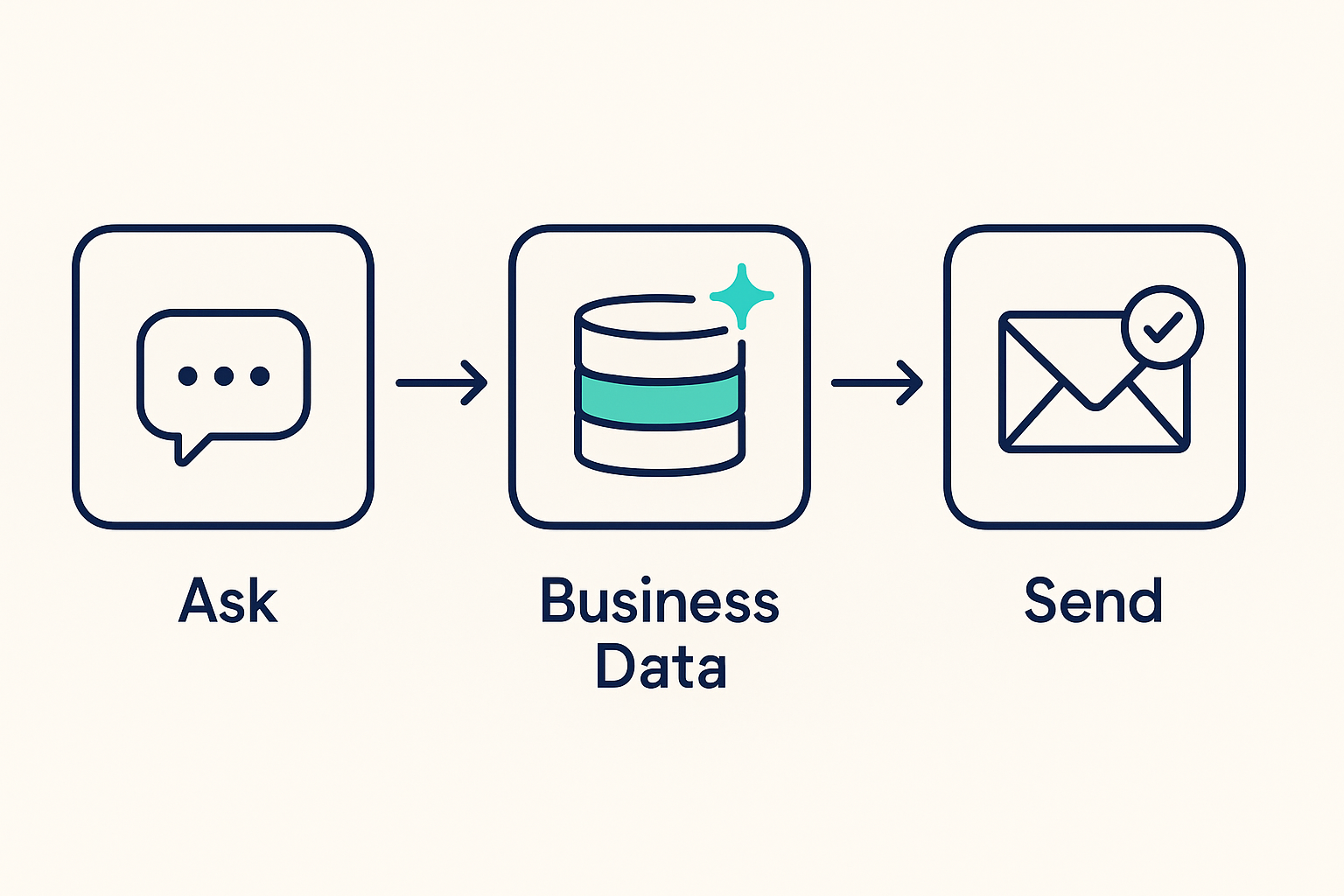
Vibe Prospecting brings that full picture into the same chat window where the email gets drafted. Ask Claude or ChatGPT a plain-English question, "what changed at this company in the last 90 days," and get back real, current context to build the first line from.
- Connect it from the Claude or ChatGPT connectors directory in a couple of clicks.
- Preview a handful of accounts before spending any credits, so the picture it returns is worth building on before spending anything.
- Power users running Claude Code can install the Vibe Prospecting Plugin for the same lookups inside scripted workflows via the Model Context Protocol.
What Founders and AEs Actually Get From Vibe Prospecting
Powered by Explorium Enterprise Business Data, Vibe Prospecting fixes the data problem behind fake familiarity with one chat-based lookup, room to test at real scale, and a free way to start.
One Lookup Covers the Whole Picture
- One question in chat returns company details, funding, hiring trends, website changes, and buying signals across 80+ signal types, instead of one scraped headline.
- Coverage spans 150M+ company profiles and 800M+ professional profiles from 50+ sources, achievable from one lookup instead of stitching a scraper, a headline, and a guess.
- 97.8%+ company match accuracy removes the most common cause of a fake-familiarity email: a mismatched company record.
Room to Test Before You Scale
- Pull real context on up to 1,000 accounts in a single request, well past the 20 to 100 a chat window can usually hold on its own.
- Test a message pattern across hundreds of accounts before sending, not a couple dozen, so a weak pattern gets caught before it damages sender reputation at scale.
Free to Start, Transparent to Scale
- A free account with no sales call, and credits pooled across every kind of lookup instead of charged separately per feature.
- See 5 real sample records and a cost estimate before any credits get spent, so a team can check the picture is actually useful before committing to a full run.
The 2026 Cold Email Checklist
The checklist that separates a reply from a delete splits into two halves: what the message says, and whether it even reaches the inbox.
- Step 1: Connect Vibe Prospecting from the Claude or ChatGPT connectors directory.
- Step 2: Pull real, current context on 5 target accounts before writing a single line.
- Step 3: Draft a five-line email: fit, one real signal, one clear ask, nothing else.
- Step 4: Test the pattern across a few hundred accounts before a full send goes out.
- Step 5: Confirm mailbox warmup, sends-per-day limits, and list hygiene so the winning draft actually lands.
The Bottom Line
AI-personalized cold emails still flop when "personalized" means one merge field, length stands in for relevance, and the booking step reads as automated. Fix the message half with real context instead of a single scraped fact, fix the infrastructure half with warmup and list discipline, and the reply rate gap between 3.43 percent and 15 to 25 percent starts to make sense.
Ready to replace the scraped-headline approach with real context, right inside chat? Try Vibe Prospecting free →

