Stop Writing Outreach That Sounds Like a Bot Wrote It
61% of buyers tune out outreach the moment it smells automated. Ask your chat app one question first, and your next send will read like a person wrote it.
Vibe Prospecting team9 min readOctober 6, 2026
TL;DR
61% of buyers say fully automated outreach makes them less likely to reply, and 73% can spot it on sight, per Forrester's 2026 B2B Buying Study, because it is drafted from a name and a job title instead of anything real about the company.
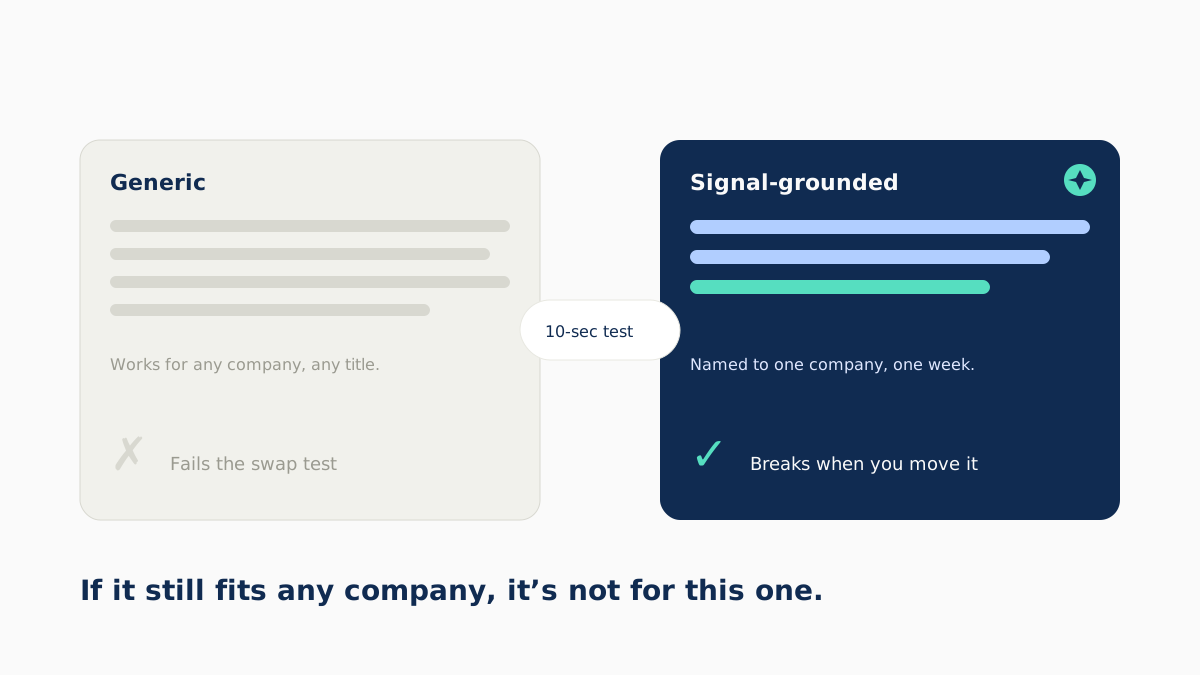
The 10-second gut check: if your message still works after you swap in a different company name, a buyer will clock it as a template.
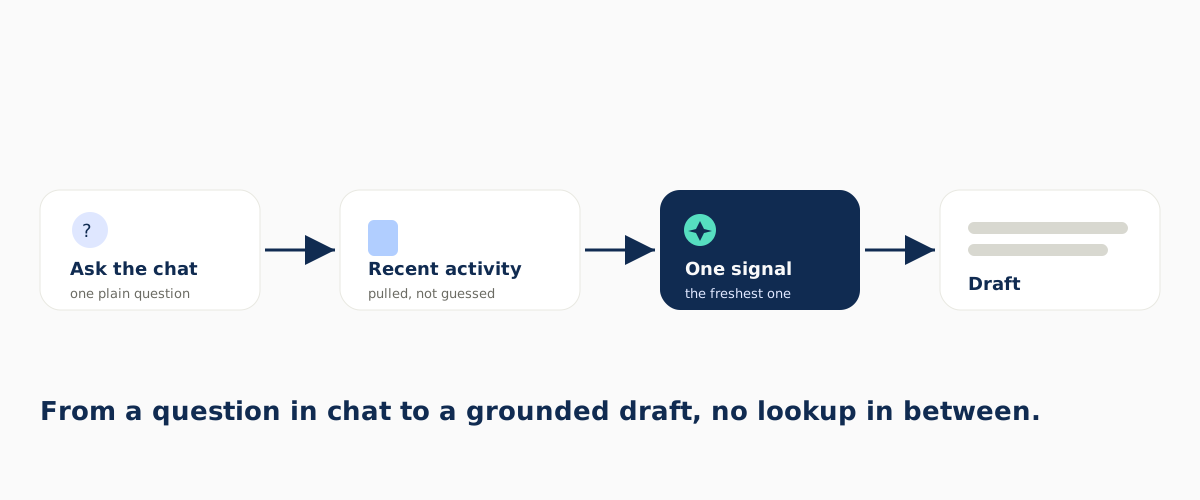
Ask your chat app one plain question before you draft: what happened at this company recently. One real answer beats three guesses about the role.
Vibe Prospecting connects to ChatGPT, Claude, and a plugin, pulling from 150M+ company profiles, 800M+ people profiles, and 18 kinds of recent company activity in one ask, powered by Explorium Enterprise Business Data.
It enriches up to 1,000 prospects in one pull instead of one at a time, so the list is ready before you start drafting, not after.
A free account removes the excuse: run a 5-record preview, check it looks right, then build the full list and draft from something true.
Signal-grounded outreach lands 15-25% reply rates against 3-5% for generic cold sequences, roughly five times better, per Instantly's 2026 Cold Email Benchmark Report.
A rep posted in a sales community last month that they're exhausted trying to get taken seriously "in all this AI fog." They're right to worry. Forrester's 2026 B2B Buying Study found that 61% of buyers say fully automated outreach makes them less likely to engage, and 73% can tell when a message is AI-generated before they finish the first line. The tell isn't that a model wrote it. It's that the model had nothing real to write from.
Why Buyers Stop Reading the Moment Outreach Smells Like AI
A message reads as AI the instant nothing in it proves the sender looked at this specific company. Most tools draft from three fields: name, title, company size. That's enough for a grammatically clean sentence and nothing else. On r/startups, founders describe pitches that "scream AI SLOP from miles away" because of "the same AI generated branding, generic websites, generated images" every other sender is also putting out. One buyer survey puts a number on the fatigue: 57% of B2B decision-makers already say most outreach they receive feels impersonal.
The Three Tells Buyers Have Learned to Spot
A sentence that could be sent to any company at this size, in this industry, with this job title.
A "research" line that just restates the recipient's title back to them.
A claim about the company that isn't true right now, what one Reddit thread calls "making shit up on the spot."
Gartner's 2026 survey of 645 B2B buyers found 69% now prefer to double-check anything AI-generated with an actual rep before they trust it. That's the cost of a thin draft: even a correct guess gets discounted.
The 10-Second Test That Tells You If Your Email Will Get Flagged
Swap the company name. If the message still makes sense, a buyer will read it as a template, because it is one. A message built around one real, dated fact about this company breaks the moment you move it anywhere else, and that's the whole point.
What a Message That Passes Looks Like
It names one dated, checkable thing about the company, ties it to your point in a single sentence, then stops. Nothing extra, nothing borrowed from a stock list of "personalization tips."
What to Actually Know About a Prospect Before You Type a Word
Before drafting, check four kinds of recent company activity, since each answers a different question a buyer is silently asking: why them, why now, and why you. One chat connection can pull all four instead of stitching together two or three separate lookups.
Four Things Worth Knowing
What to check
What it looks like
Question it answers
Active buying research
The company is actively researching your category right now
Why this week, not next quarter
Money moving
A new raise, or someone new just got budget authority
Why there's budget to act
A tool switch
They dropped a tool or adopted a new one
Why this gap exists right now
Team growth
Headcount growth in one specific department
Why this team, at this size
Pick the Newest One, Not the Loudest One
When two facts both qualify, use whichever happened more recently. A tool switch from two weeks ago beats a bigger-sounding headcount number from last quarter, because recency is what makes a buyer believe someone looked today, not three months ago.
One Real Fact Beats Three Fake Compliments
Reference exactly one recent fact, state it plainly, then connect it to one outcome. Stack two or three and the message reads like a dossier, not a note from a person.
Text
Generic (fails the swap test):
"Hi [First Name], as a [Job Title] at [Company], I imagine
you're always looking for ways to improve efficiency..."

Signal-grounded (passes the swap test):
"Noticed [Company] swapped outbound tools two weeks ago.
Teams mid-switch like that usually hit a data gap before
the new tool is even fully rolled out."
Keep It to One Fact
One fact stated plainly reads as research. Three facts stacked reads as surveillance.
State the fact, then the implication, then stop writing.
Skip the adjectives in that sentence. A date or a number carries more weight than praise.
Check that the fact is current before you send it. A chat connection that refreshes continuously beats a list that was accurate the day it was exported and nothing since.
The Imperfect Pitch Wins More Replies Than the Polished One
Leave the rough edges in wherever the message makes a judgment call, because total polish on a genuinely open question now reads as fake. Founders on r/startups describe deliberately dropping the "razzle dazzle" from their pitches, and say "investors are now vehemently kicking against these types of decks" when the gloss is too even. One thread even frames the whole trend as a "quick buck and get rich fast mentality" that buyers have started pattern-matching against.
Where a Rough Edge Helps
Hedging on something genuinely uncertain ("not sure this is a priority right now, but") reads as honest, not weak.
A short, plain sentence breaking up a smooth paragraph signals a person wrote it.
Naming a real limitation of what you're offering builds more trust than a pitch with none.
Where It Does Not Belong
Never hedge on the fact itself. The one thing you reference about the company has to be true and current, full stop. Everything around it can be loose. That one line cannot be.
Why Fixing a Bad AI Draft Takes Longer Than Writing It Yourself
Editing drags on because every draft starts from the same thin inputs, so every edit pass is really you adding back a fact a better starting point would have included from the first line. On r/Emailmarketing, one rep put it plainly: "I keep being told AI saves time on email but I'm spending just as long fixing what it gives me."
Move the Research Before the Draft, Not After
Pull the company's recent activity before you ask the chat to draft anything, so the first version already has something real in it.
Build the whole list in one pull instead of looking a prospect up at a time between drafts.
Preview five records first. Check the facts look right before you commit to the rest of the list.
Ask Your Chat App for the Signal, Not the Guess
Vibe Prospecting fixes this at the source: one connection inside ChatGPT or Claude that pulls real, recent company activity before you write a word, built on Explorium Enterprise Business Data.
One Connection Covers the Whole List
150M+ company profiles and 800M+ people profiles, pulled together from 50+ premium sources in one ask instead of two or three separate tools.
18 kinds of recent company activity, including job changes and funding events, which is exactly the raw material for the one real fact your message needs.
Add it from the Claude Connectors Directory or the ChatGPT Plugin Directory in a couple of minutes, no engineering ticket required.
Built to Handle a Full List, Not One Prospect at a Time
Up to 1,000 records enriched in one pull, so the whole targeted prospect list is ready before drafting starts, not assembled prospect by prospect.
Most chat-based enrichment tools stall out around 20 to 100 prospects before they run out of room. This one doesn't.
99.999% uptime, so a big batch doesn't stop halfway through.
A Free Account Removes the Excuse
Start free, no sales call, a first ask takes minutes.
One shared credit pool across the whole app instead of paying separately for each kind of data.
Preview five records plus a cost estimate before anything is spent, so a bad batch never burns credits you didn't mean to use.
Already building lists by hand? Explorium's plain-language rundown of what data enrichment actually is covers the mechanics behind what Vibe Prospecting pulls in one ask.
For Claude Code and Claude Desktop Power Users
Most people never need this. If your workspace runs its own agents through Claude Code or Claude Desktop, this config connects the same data behind the scenes.
Score the message against five things. Fail more than one, and it's still running on guesses. Treat it as a go or no-go, not a style note.
Check
Generic draft
Signal-grounded draft
Research cost
Looked up by hand, prospect by prospect
Pulled for the whole list in one ask
How current
Static, often stale by the time it's sent
Pulled from 50+ sources, refreshed continuously
What it's built on
Job title and company size only
One of 18 kinds of recent company activity
Swap test
Still works for any company in the vertical
Breaks the moment you move it
Reply rate
3-5% on a generic cold sequence
15-25% when it's signal-grounded
One sales director shared a seven-figure run of DM replies on LinkedIn and credited it to exactly this shift: the messages still sounded like a person, they just happened to be faster to produce, because every one of them referenced something real about the account first.
From Chat Prompt to Signal-Grounded Email in Five Minutes
The shortest path from a generic send to a believable one starts with a free account and one honest question.
Step 1: Create a free Explorium account. No sales call.
Step 2: Add Vibe Prospecting from the Claude Connectors Directory or the ChatGPT Plugin Directory.
Step 3: Preview five records. Check the facts are real before you build the full list.
Step 4: Pull the full targeted prospect list in one ask, up to 1,000 at a time.
Step 5: Draft each message from one recent fact, run the swap test, then send.
The fix was never a better prompt. It's a better question asked before you draft anything. One chat connection covers every kind of recent company activity. One pull replaces an hour of prospect-by-prospect lookup. A free account removes the last excuse to keep drafting from a name and a title.