

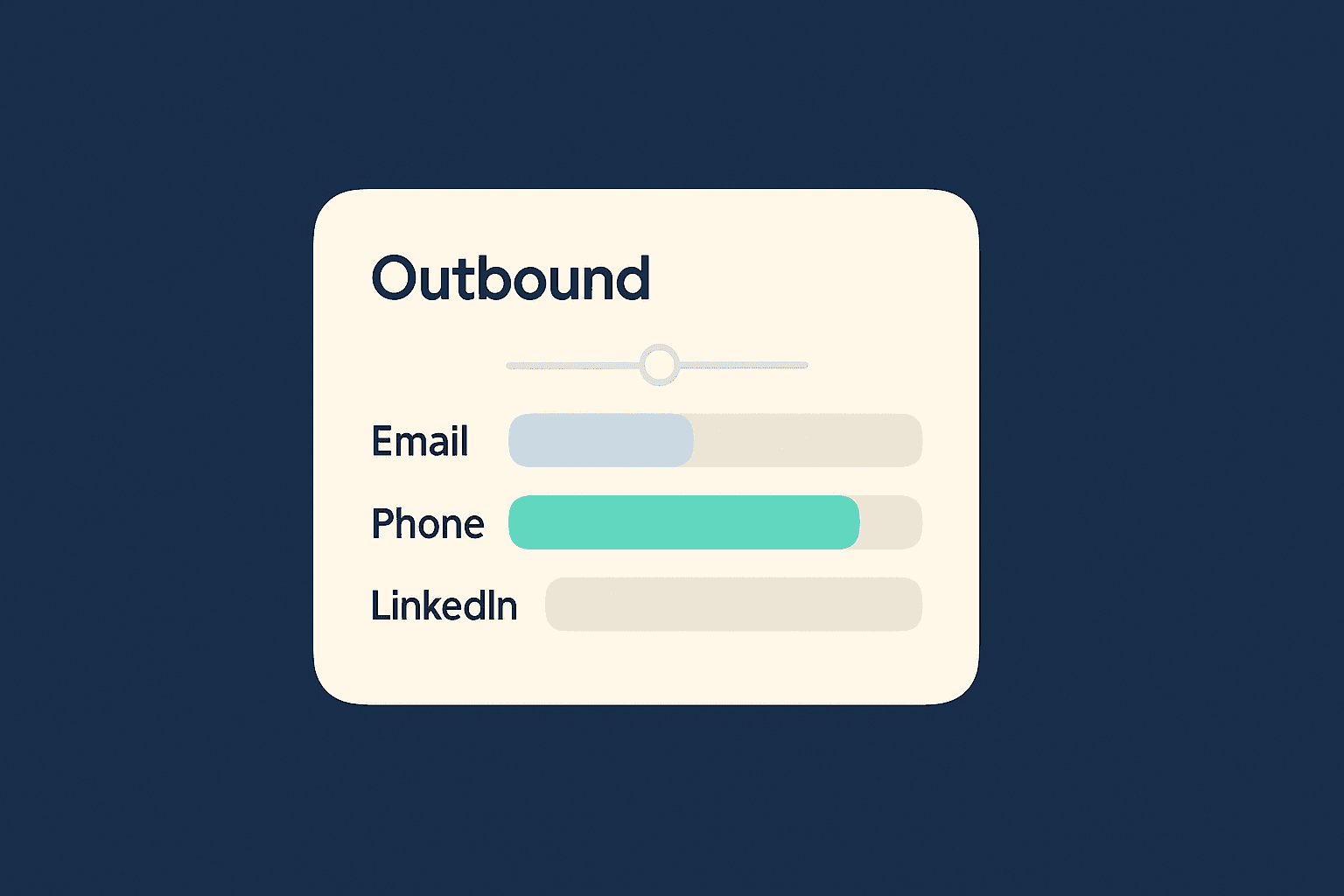
Your cost per meeting has been drifting up all year, and the channel split behind it probably has not moved since 2024. That is the quiet failure mode in most outbound programs: the outbound channel mix gets set once, then runs on autopilot while reply rates sink underneath it. Average cold email replies sit at just 3.43% in 2026, down from 8.5% in 2019, yet plenty of teams still push 80% of their touches into the inbox.
The answer is not a hot take about email being dead. It is an audit: price every channel by what a booked meeting actually costs, set clear thresholds for when effort moves, and confirm your contact data can support a phone-heavier mix before you commit anyone's calendar to it. This guide walks that audit end to end, and shows how to run the data-heavy parts from a single chat session in Vibe Prospecting.
Start with the meeting math, not the channel debate
Channel arguments stay unresolvable until you put a price on a meeting. The calculation is simple: take everything a channel costs you in a month, including rep hours at a fully loaded rate, the tools that run it, and the data behind it, then divide by the meetings it booked in that same month.
Here is a worked example for one rep spending 50 hours a month on a channel at a $50 fully loaded hourly rate, plus $350 in tooling and $200 in data. That channel costs $3,050 a month. Book 5 meetings and each one costs $610. Book 10 and it costs $305. Same effort, same copy, wildly different economics.
One rep, four channel strategies
| Approach | Monthly activity | What converts | Meetings | Cost per meeting |
|---|---|---|---|---|
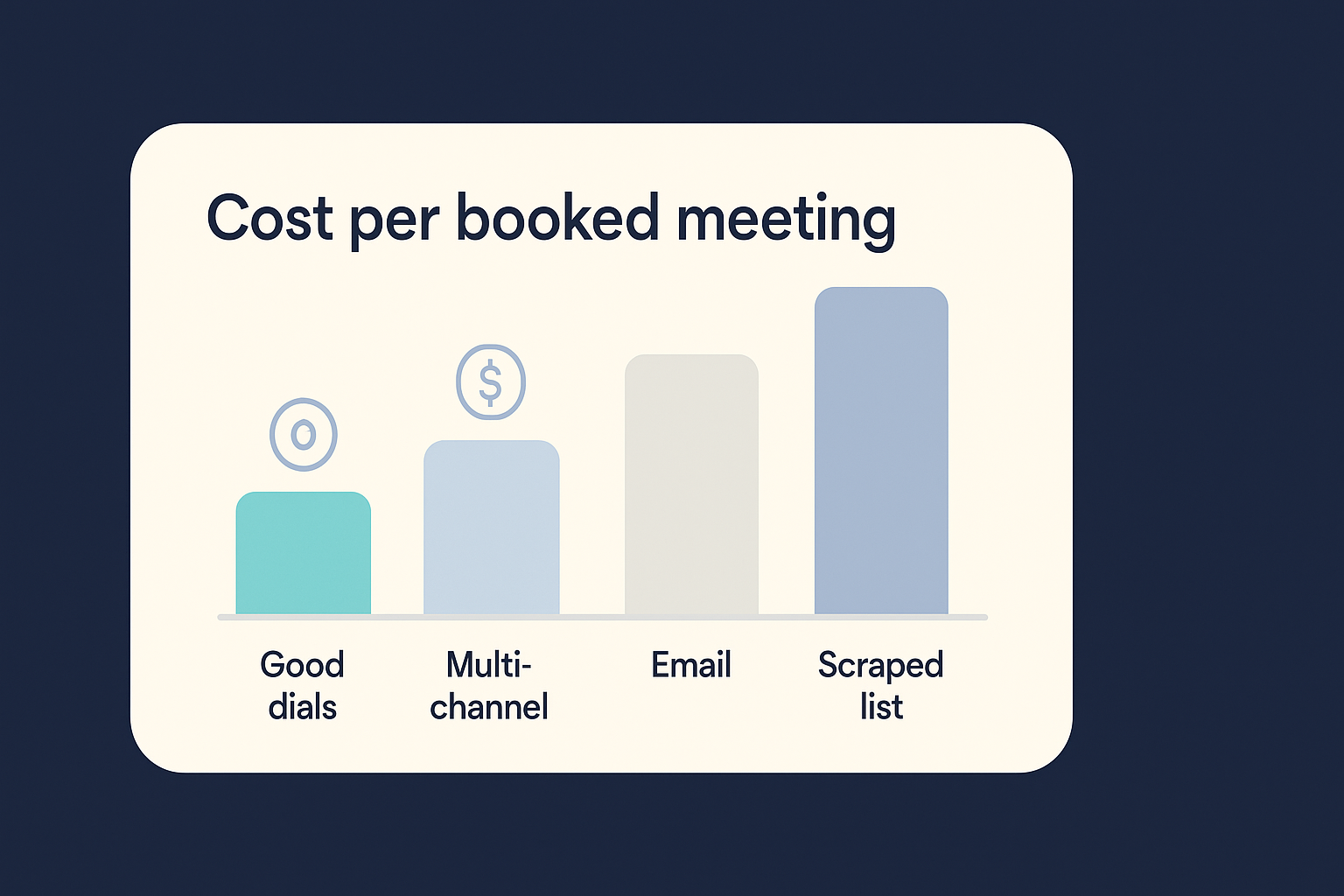
| Calling with direct dials from premium sources | 1,200 dials | 30%+ connect rate | 11 | ~$370 |
| Email + phone + LinkedIn on the same accounts | Same target list | 2x-3x the replies of any single channel | 16 | ~$305 |
| Cold email alone | 2,500 sends | 3.43% reply, ~8% of replies book | 7 | ~$430 |
| Calling a scraped list | 1,200 dials | 6% connect rate | 2-3 | ~$1,400 |
Look at the two calling rows. Same rep, same dial count, a 4x swing in output. The difference is not talent or script. It is whether the numbers being dialed actually belong to the people on the list. That is why the audit starts with data, not with a channel opinion.
Why the inbox went quiet in 2026
Two forces collided. AI writing tools made sending effectively free at the exact moment the major mailbox providers started enforcing strict rules on bulk senders. More mail chasing fewer inbox slots means everyone's reply rate fell together.
- Average cold email replies dropped from 8.5% in 2019 to 5% in 2025 to 3.43% in 2026. Top-quartile senders still clear 5.5%, and the best campaigns beat 10%.
- Google and Yahoo began requiring authentication (SPF, DKIM, DMARC) plus one-click unsubscribe for anyone sending 5,000+ emails a day in February 2024.
- Microsoft started rejecting non-compliant bulk mail at the server level in May 2025, and Gmail moved from filtering to outright rejection in November 2025.
- Spam complaints have to stay under 0.3% or delivery collapses across your whole domain. On 5,000 daily sends, that budget is 15 complaints. One sloppy blast spends it before lunch.
One kind of email still performs: messages that reference something real happening at the company, like a funding round, a hiring push, or a new tool showing up in their stack. That style of outreach still earns 15-25% replies in 2026, which is why tracking buying signals matters more than raising send volume.
The phone works again, but only if the numbers are real
While email declined, cold calling quietly improved: success rates rose to 2.7% in 2026 from 2.3% the year before. Fewer teams are calling, so the ones who do face less competition for attention. The catch is that phone is a data-quality game before it is a skills game.
- Connect rates on direct dials sourced from premium data reach up to 44.63%. Scraped or stale lists connect at 3-10%.
- The US benchmark runs 25-35 dials per booked meeting; the best reps get there in 12-18, almost always because their numbers are current.
- LinkedIn InMail pairs naturally with calling: 10-25% response rates and 50-60% opens make it the strongest companion touch.
Here is the blocker most teams hit: anyone who cut calling between 2020 and 2022 stopped collecting phone numbers, so their CRM has emails and almost nothing to dial. Tools built around email discovery cannot fill that gap, because their sources simply do not carry phone data. Before any calling push, you need an honest count of how many target contacts you can actually reach by phone.
Four signs it is time to shift effort between channels
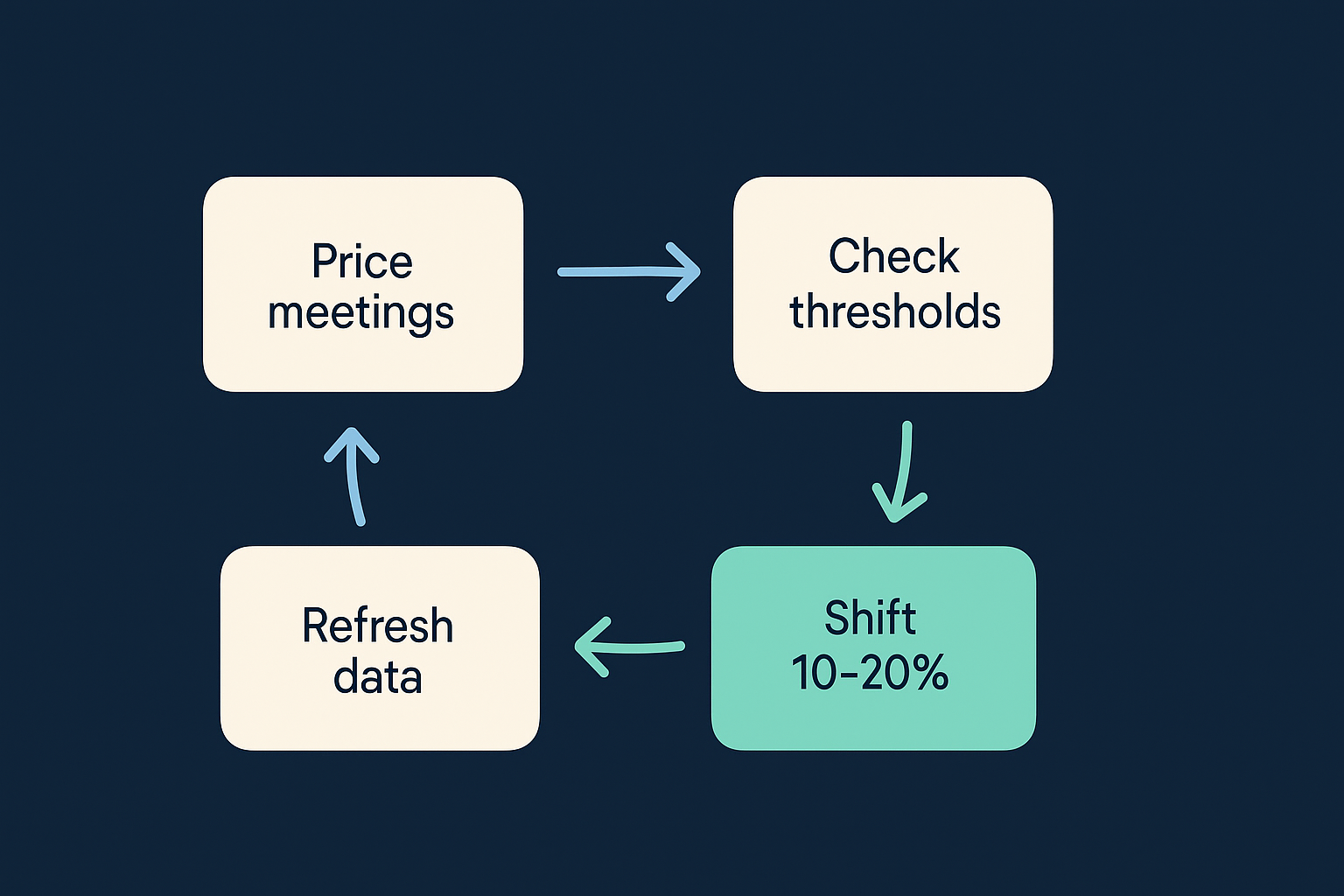
Move on thresholds, not vibes. These four cover the common cases:
- Replies under 2% for two straight months while sending health is clean (inbox placement above 90%, complaints under 0.3%): the channel is the constraint, not your setup. Shift 30-40% of touches to phone.
- Email cost per meeting runs above 1.5x your blended average for a full quarter: cap send volume and add channels instead of scaling sends.
- Inbox placement below 90% or complaints above 0.3%: stop. Fix authentication and list hygiene first, because a delivery failure imitates channel decline and will mislead the whole audit.
- Phone coverage above 70% of your target accounts: a calling-heavy mix is viable. Below 50%, fill the data gap before you reassign anyone's time.
Run the whole audit from one chat session
The slow part of a channel audit has always been the data work: exporting lists, counting which records have a usable phone number, patching gaps across tools. Vibe Prospecting collapses that into a conversation. You ask in plain English, inside ChatGPT, Claude, or the web app at app.vibeprospecting.ai, and the answers come back from Explorium Enterprise Business Data: 150M+ companies and 800M+ professional profiles drawn from 50+ premium sources.
Start with the coverage question that decides whether calling is even on the table: