

Every tool in your stack picked up an "agent" in its name this year, and none of the demos explain what actually changed underneath. So here is an AI sales agent test you can run yourself, in about twenty minutes, inside a chat window you already have open. No pilot, no procurement cycle, no data team. Just five questions, one real record out of your own pipeline, and a willingness to watch what happens when the rehearsed path breaks.
The 20-Minute Test, Start to Finish
Pull one messy record out of your own pipeline, hand it to the tool, and ask it to explain both its next move and the data behind that move. Everything else below is detail on how to read the answers. The test itself is short enough to run between two meetings.
The Five Steps
- Minutes 1 to 3. Find an account where something recently changed: an acquisition, a title change, a company that quietly doubled its headcount.
- Minutes 4 to 8. Hand that record over and ask what it would do next, and why it picked that.
- Minutes 9 to 12. Ask which specific data point drove the answer. A real reasoning step can name one.
- Minutes 13 to 16. Ask what it does when two sources disagree about the same company.
- Minutes 17 to 20. Look up that record yourself against a current source and see whether the tool was working from something accurate to begin with.
Step five is the one almost everybody skips, and it is usually where the answer has been hiding all along.
Agent, or Automation With a Newer Name?
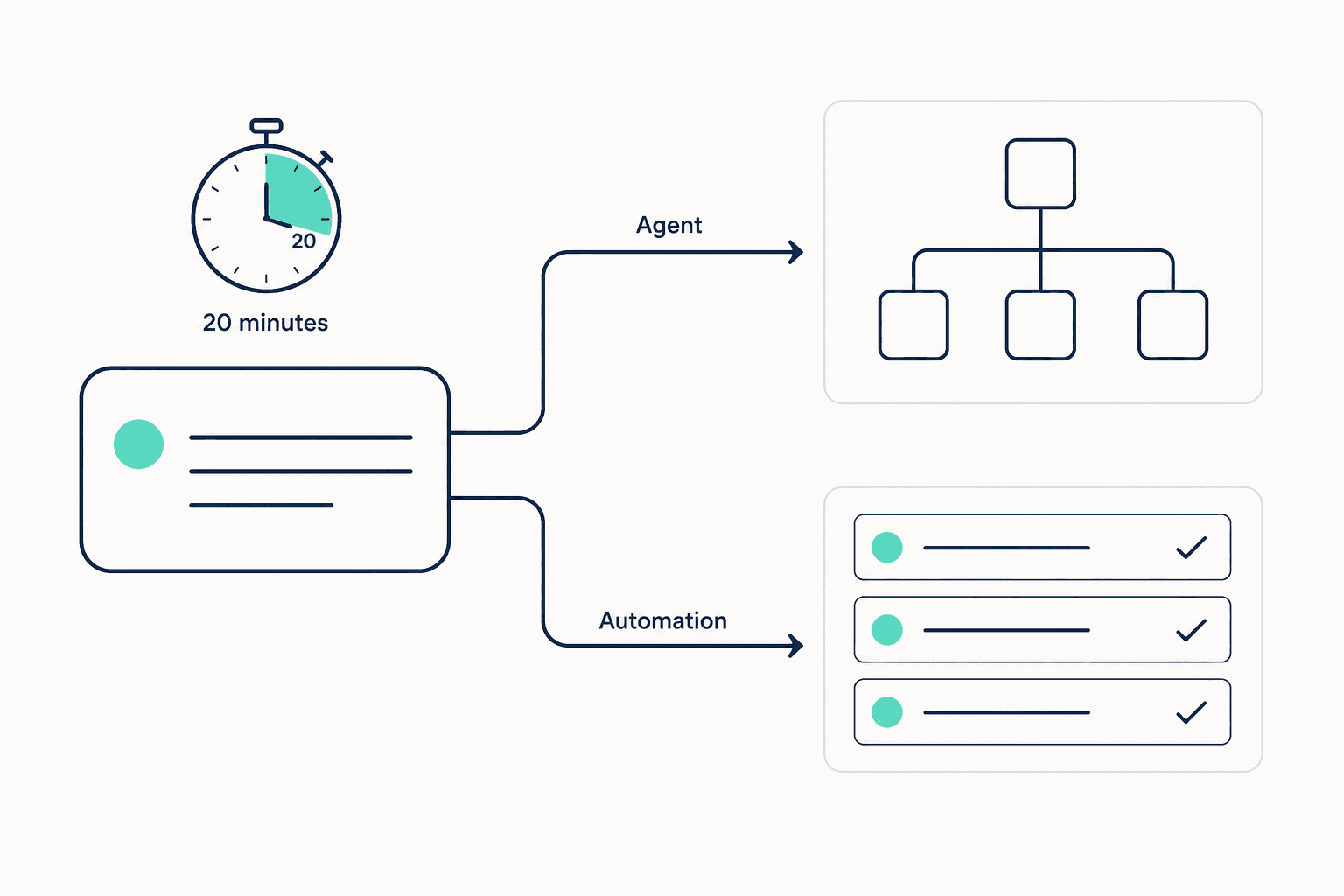
Automation runs a rule somebody wrote in advance; something genuinely agentic works out a move for a situation nobody wrote a rule for. That is the whole distinction, and it falls apart the moment the record underneath is out of date, because a wrong premise still produces a confident plan.
What Each One Looks Like in Practice
- Automation: nothing has happened on this deal in fourteen days, so send the reminder.
- Agentic: the champion left and headcount is down, so re-score the deal and draft a different angle for whoever replaced them.
- Neither one survives a record that still lists a champion who walked out six months ago.
A Side-by-Side You Can Hold a Demo Against
| What you are watching | Renamed automation | Actually agentic |
|---|---|---|
| A surprise it was never configured for | Hands it to a human and stops | Works out a new move and takes it |
| A record that turns out to be wrong | Acts on it anyway, quietly | Raises a flag instead of guessing |
| Where its answer comes from | Whatever fields already sit in the CRM | Current company and contact data it can point at |
| Last week's outcome | Forgotten, every run starts from scratch | Feeds into what it tries next |
| How it proves it worked | Counts of things sent | A stage conversion number that moved |
Why Everything Got Relabeled at the Same Time
Gartner has a name for the rebrand, agent washing, and puts the count of vendors that genuinely qualify at roughly 130 out of the thousands now using the word. The same analysts expect more than 40% of agentic AI projects to be shut down by the end of 2027, mostly over cost, unclear value, and thin controls. Regulators noticed too: the SEC and the FTC both brought actions in 2025 against companies whose AI claims ran well ahead of what the software did.
"AI has become a very expensive way to avoid fixing boring problems. A weak sales process gets another automation. A messy handoff gets renamed as an agent workflow... The same bottlenecks are still there, only now they are buried under more tools." Guy Pistone, CEO at Valere, on LinkedIn (source)
That post collected close to two hundred reactions and comments in a week, which tells you how many people recognised their own stack in it.
The Part of the Demo Nobody Shows You
Ask for a scenario the sales engineer did not rehearse, then watch whether the tool adapts or waits to be told what to do. A rules engine fails visibly. A reasoning system produces a new decision you can actually follow the logic of.
What to Hand It Live
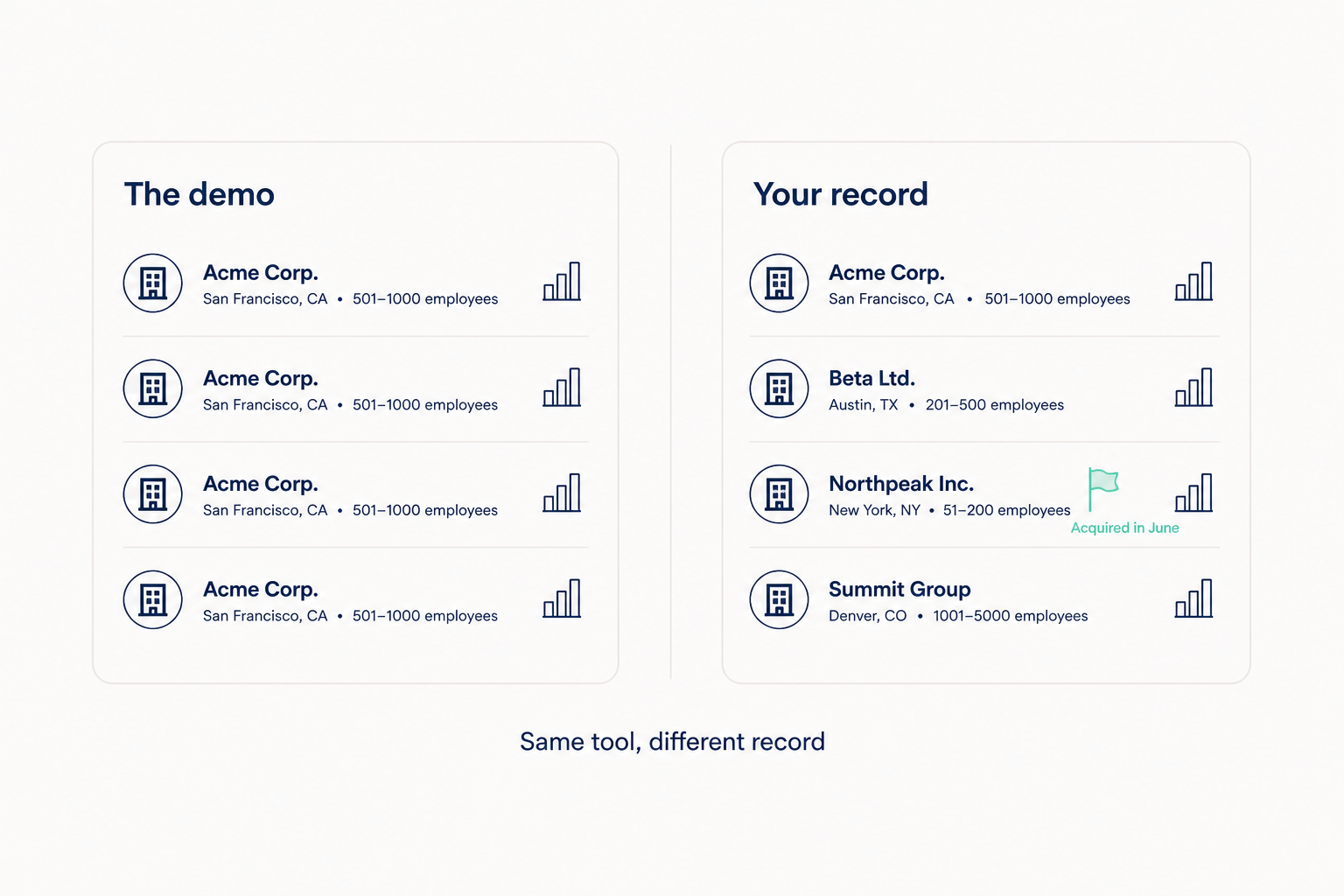
- An account acquired last quarter that still shows the old parent company.
- A contact who changed roles, so the title sitting in your CRM no longer matches reality.
- Two sources disagreeing on headcount, plus a question about which one it believes and why.
Answers That Should End the Call
- The same shape of output for every input, including the ones designed to break it.
- No ability to name the data point sitting behind a recommendation.
- A confident answer on a record that is plainly out of date, with no flag attached to it.
The Boring Reason Most of These Tools Underdeliver
Most of the time the reasoning is fine and the record it reasoned over was months out of date. A company that changed shape, or a contact who left in March, turns every score built on top into a guess wearing a confidence number, and nobody catches it until the quarter closes.
What That Looks Like in a Pipeline Review
- Deals scored on headcount that changed two funding rounds ago.
- Outreach addressed to a champion who has been gone since the spring.
- A pilot reporting activity numbers because no outcome number moved enough to report.
The Fix That Comes First
- Take fifty recent actions the tool took and pull the exact record behind each one.
- Look each company and contact up again against a current source, then count how many still hold.
- If more than one in twenty traces back to a stale or mismatched record, fix the data before you judge the reasoning.
What to Ask on the Call
Ask about the data before you ask about the model, because the sharpest reasoning layer on the market still cannot outrun a wrong record. Five questions usually settle it, and the shape of the answer tells you more than the number does.
| Ask this | A good answer sounds like | A bad answer sounds like |
|---|---|---|
| How accurate is your company matching, and where is that published? | A specific rate you can go and read, plus how it gets measured | "Extremely high," with nothing behind it |
| How often does the company and contact data refresh? | A cadence in days, written down somewhere | "Continuously," with no further detail |
| What happens when the record is wrong? | It flags the record and stops | A pause, then a change of subject |
| How many sources sit behind the data? | A number, and what each of them covers | "Our proprietary data" |
| What does it cost to re-check a list I already have? | Credits out of one pool, priced before you spend them | A new line item and another call with sales |
"AI is helping the top reps become even better. Not replacing them... allowing sellers to focus on moving big rocks by taking care of the pebbles." Anthony Natoli, Senior AE at LinkedIn, on LinkedIn (source)
Check Your Own List Before You Blame the Agent
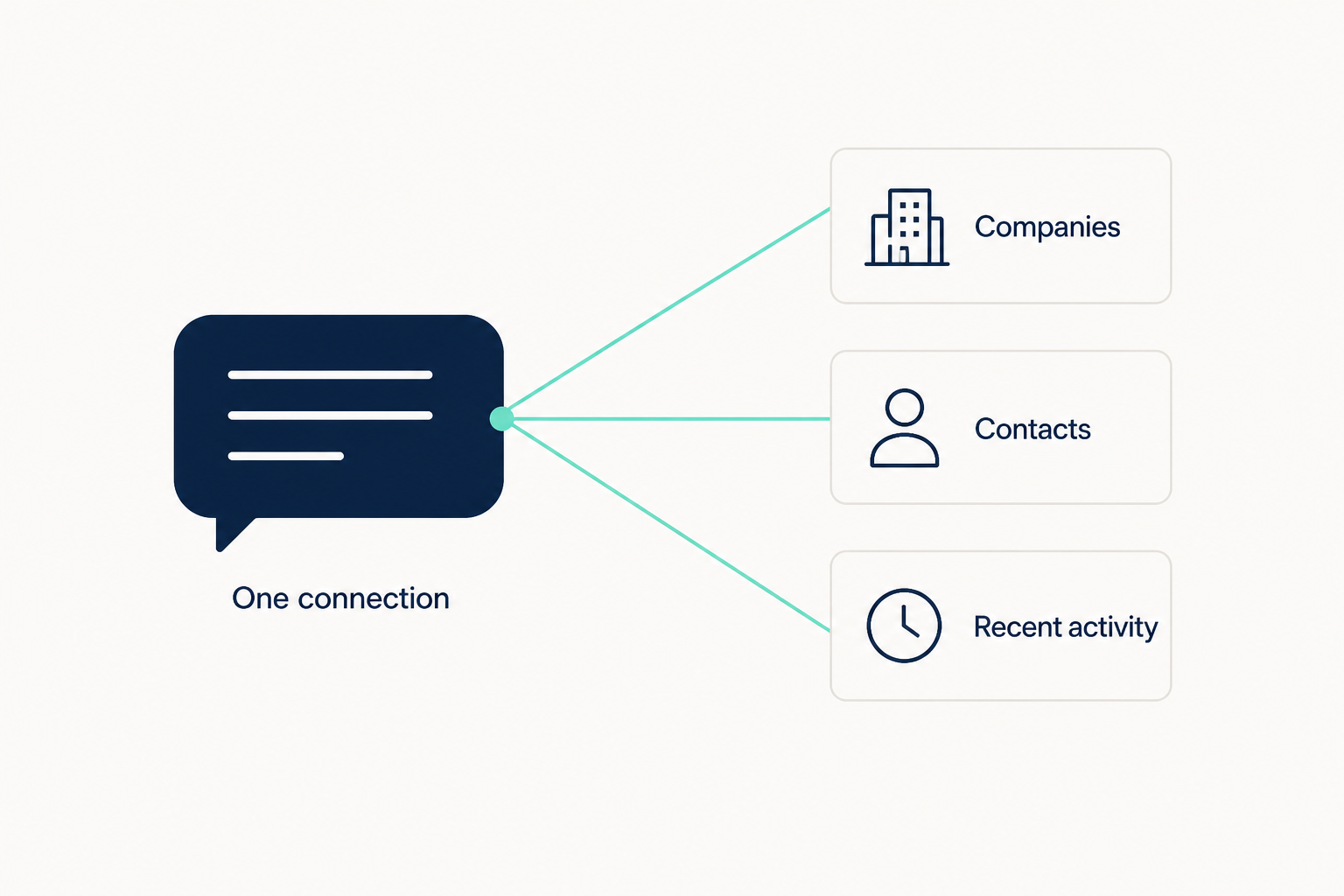
Before the next renewal, run your own list through a chat window and see how much of it still holds up. Vibe Prospecting is a connection you add to Claude or ChatGPT once and then ask in plain language, which turns step five of the test into something you do yourself instead of a ticket you file. Powered by Explorium Enterprise Business Data.
One Connection Covers the Whole Check
- Company search across more than 150 million company profiles, filtered by size, industry, funding stage, and more.
- Contact details for more than 800 million professionals, tied to the companies you just looked up.
- Recent company activity across 18 categories, so a funding round or a leadership change surfaces before your outreach does.
- More than 50 premium sources feeding that single connection, which is why a second tool is rarely worth adding.
It Handles a Real List, Not a Demo Sample
- Up to 1,000 records per call at 100 requests per second, so re-checking a whole pipeline is one pass rather than an afternoon.
- Most in-chat enrichment tools load every row straight into the chat window and start straining somewhere between 20 and 100 records.
- Company matching lands at 97.8% and above, a published number you can hold your own list against rather than take on faith.
Free to Start, and Priced in the Open
- A free account, first result in minutes, no sales call in between.
- One shared credit pool across every kind of lookup, so cleaning up a list does not need its own contract.
- Every export opens with a five-record preview and a cost estimate before any credits move.
Wiring It Into Claude Code
Most people add Vibe Prospecting straight from the Claude or ChatGPT Connectors Directory. If your team already runs agents inside Claude Code, the Vibe Prospecting Plugin is the supported route, and the config below is the short version of it. Background on how the connection itself works: Explorium's MCP overview.