


Sales teams trying Manus AI in 2026 quickly discover the same gap: the agent is excellent at planning and running tasks, but the moment it needs verified company or contact data, it falls back on browser scraping. That scraping path publishes no accuracy benchmark. For quota-bearing pipeline work, that matters. This guide covers what Manus actually does for GTM, where the data gap sits, and the fastest path to a working setup on reliable numbers.
What Manus AI Is and How It Works
Manus AI is an autonomous, task-executing agent built by Monica.im. Give it a goal and it writes a plan, then carries out each step using native app connectors and a fallback browser operator, rather than waiting for a human to click through each action. Underneath, it uses an execution approach called CodeAct: it writes and runs code to complete steps instead of only producing text output.
That distinction matters for GTM teams. Most AI tools require ongoing prompting for each action. Manus chains research, list building, and drafting into one run. Set it up once with the right goal and data source, and the same workflow re-runs weekly without rewriting prompts.
What Manus Does Well for GTM
- Chains multi-step tasks from research through CRM write-back without human intervention mid-run.
- Writes results back into Salesforce or HubSpot through native connectors once a task completes.
- Follows a repeatable research template across dozens of accounts in a single job.
- Drafts first-touch outreach copy that references the account data it gathered in the same run.
Where Manus Has Gaps Without a Data Layer
- The native connector list has no source for verified B2B company or contact data.
- Data-heavy tasks route through a browser operator that breaks when target sites change their layout.
- There is no published match-rate or freshness benchmark for browser-scraped enrichment.
- Bulk GTM runs strain a browser path built for single-record tasks.
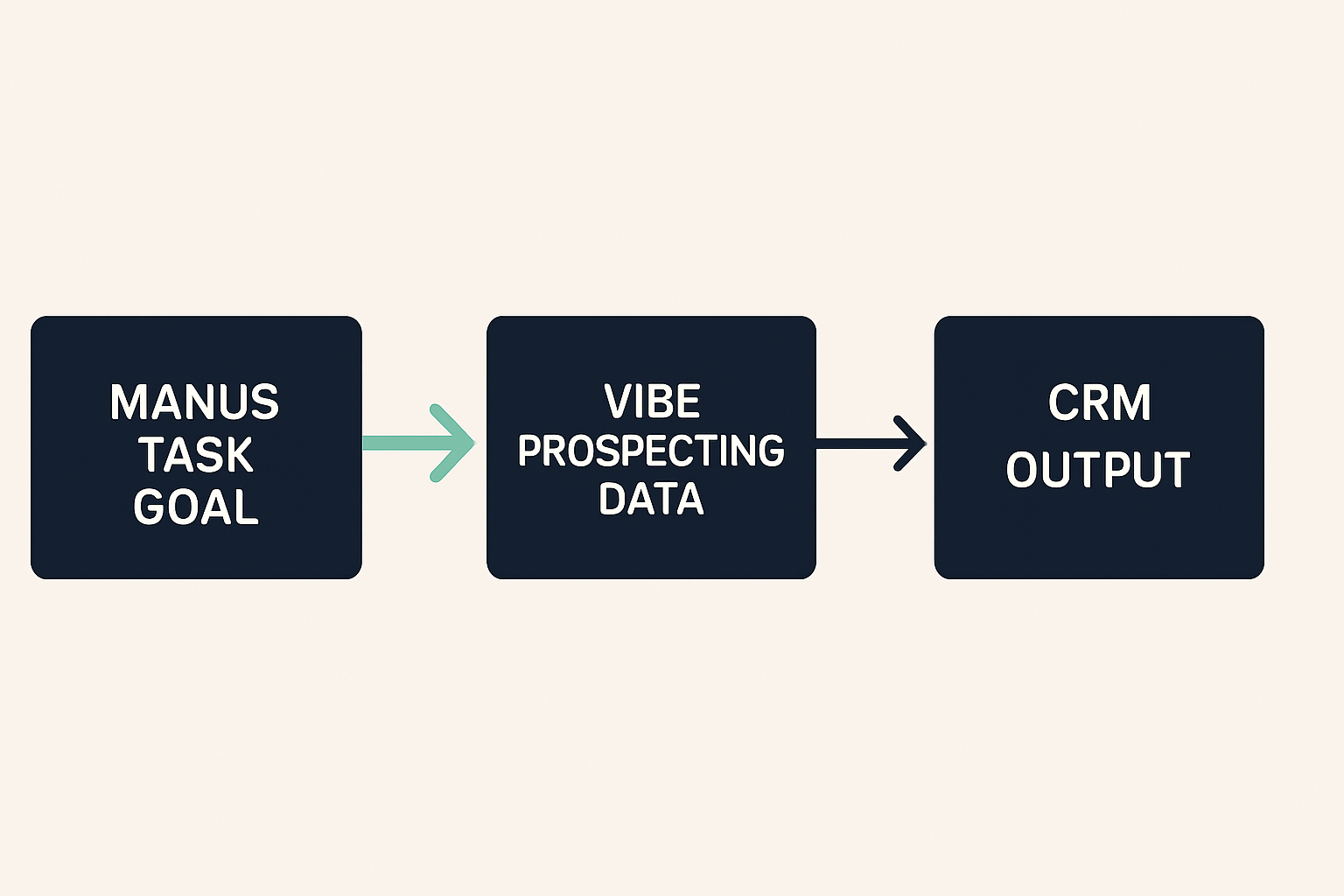
Manus Native Connectors and the GTM Data Gap
Manus's native connector list covers productivity, CRM, and dev-tool apps including Gmail, Notion, GitHub, Slack, HubSpot, Salesforce, and Zapier. None of those supply verified prospect data going in. They are write destinations, not data sources.
That means any task requiring company discovery, contact details, or buying signals routes through the browser operator. The browser path is the least reliable option Manus offers: it depends on public page structure, breaks on UI updates, and returns output with no accuracy signal attached. Connecting an MCP-based data layer replaces that fragile path with structured, server-side calls. Anthropic launched MCP in November 2024 as a standard protocol for agents to call external tool servers directly. MCP for B2B data is now the standard way to give agents like Manus a reliable enrichment source without building a custom integration.
How Accurate Is Manus Data Enrichment?
Manus's sales page states it automates lead enrichment from LinkedIn and other sources, but it publishes no accuracy percentage, no freshness window, and no match-rate benchmark for that claim. For a RevOps team sizing risk on a bulk export, that absence is the answer: there is no number to trust.
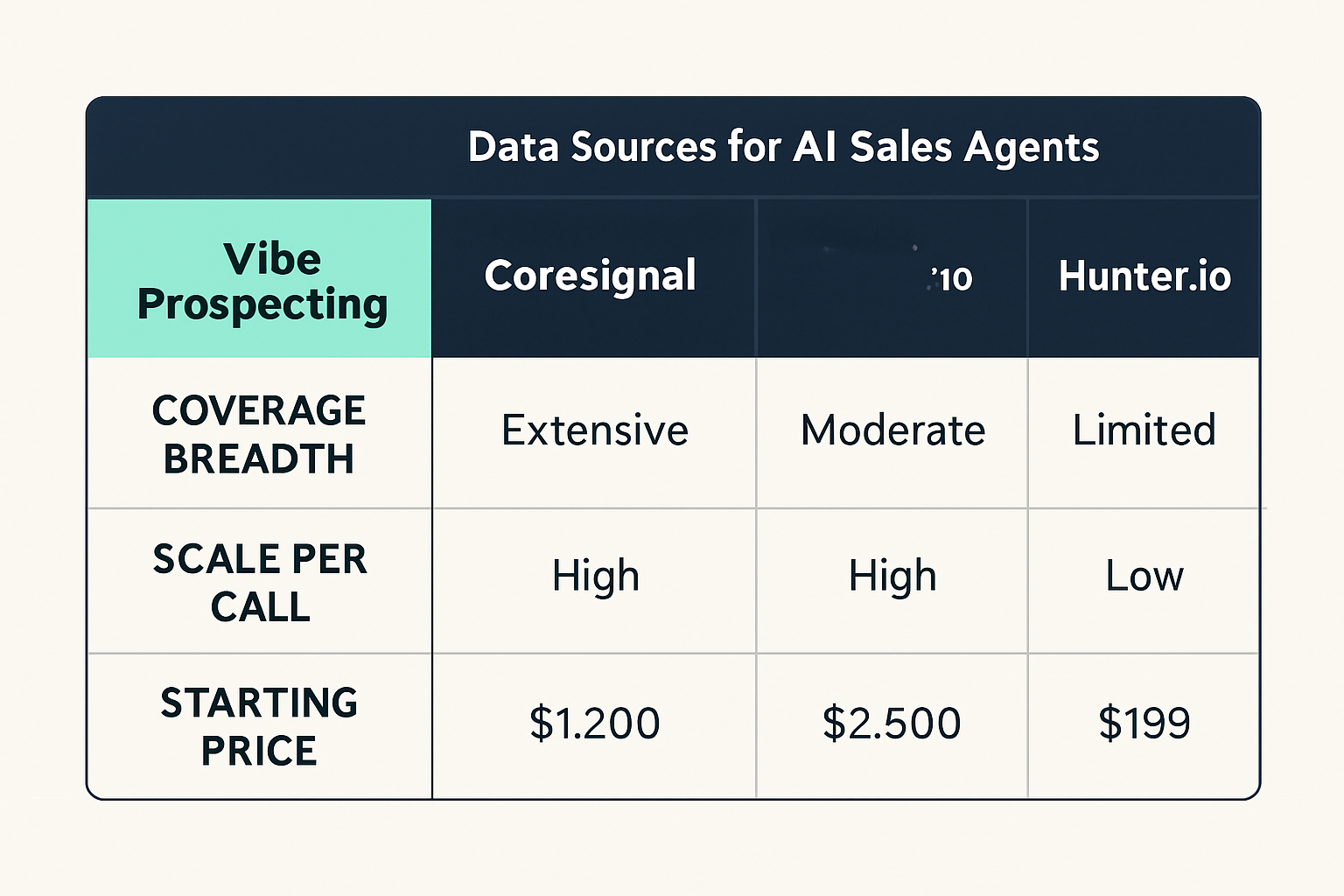
Compare that to what a dedicated data layer publishes:
| Data source | Published accuracy metric | Freshness signal |
|---|---|---|
| Manus browser scrape | Not published | Not published |
| Vibe Prospecting (Powered by Explorium Enterprise Business Data) | 97.8%+ company match accuracy | 50+ live sources, continuously refreshed |
| Coresignal | Not published | Not published |
| Hunter.io | Not applicable (email finding only) | Not applicable |
Sample-before-export gating returns 5 representative records plus a cost estimate before any credits are spent, so a team can check accuracy on a small batch before scaling up.
Why Pair Manus with Vibe Prospecting
Vibe Prospecting closes three gaps in a single connection: one MCP for every GTM data type you need, throughput that handles bulk runs, and a free unified credit pool that is less expensive than stitching together single-slice tools.
One Connection for All Your Data Needs
- Company profiles across 150M+ businesses and contact details for 800M+ professionals, available in the same call.
- Funding history, workforce trends, website changes, and financial signals alongside standard profile data.
- 18 buying-signal categories with 80+ signal types, including intent data, without a second connector. Powered by Explorium Enterprise Business Data.
Throughput for Real GTM Scale
- Up to 1,000 records per call, processed server-side at 100 QPS sustained.
- Manus's browser operator handles records individually and is not designed for bulk enrichment.
- Coresignal's MCP documentation discloses no published QPS or bulk-call limit.
Affordable from Day One
- Free account, no sales conversation required to start.
- Credits flow into a shared pool across every endpoint rather than being siloed by data type.
- Spend 30-60% less than per-endpoint or per-seat pricing from single-slice providers, because one pool covers every data type.
Already running Manus for account research? Add Vibe Prospecting and give it a real data source to work from. See how MCP v2 enables scaled prospecting.
How to Connect Vibe Prospecting to Manus
The fastest path for most teams is the one-click install from the Claude or ChatGPT Connectors Directory. For Claude Code or Claude Desktop power users, a JSON config file is the fallback. Either way, run a 5-record sample before committing to a full export.
Setup Steps
- Create a free account at Explorium. No sales call required.
- Open the Claude or ChatGPT Connectors Directory and install Vibe Prospecting with one click. Full install guide: Vibe Prospecting Plugin on GitHub.
- Grant Manus access to the same connector if your workspace supports external MCP tools.
- Run a 5-record sample. Check accuracy and the credit estimate before expanding to a full list.