When Does AI Outbound Need a Human? A 3-Lane Review System for 2026
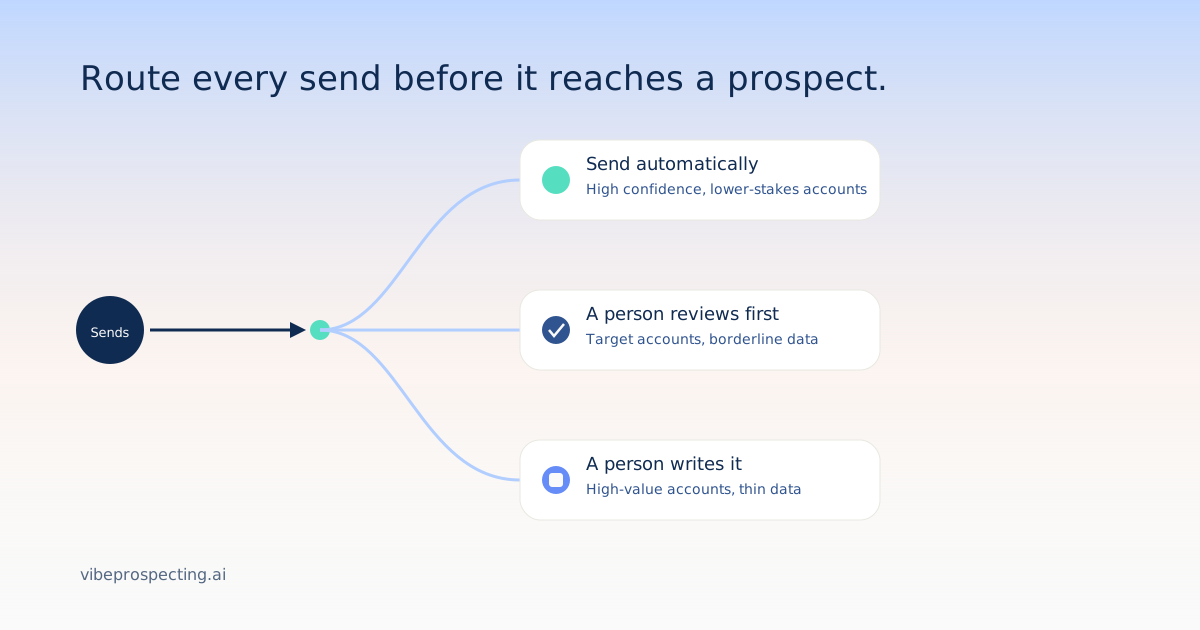
Human-in-the-loop AI outbound in 2026 means routing every send into one of three lanes by account value and data freshness, not reviewing everything by hand.
Vibe Prospecting team8 min readOctober 5, 2026
TL;DR
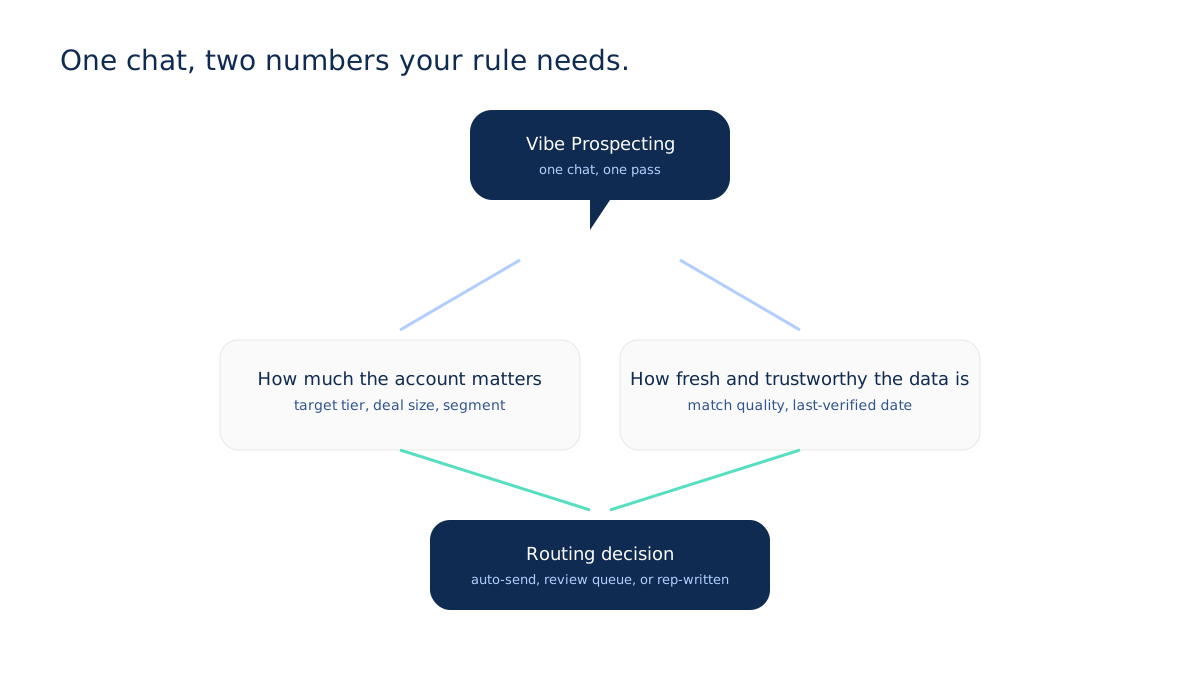
The fix for AI outbound isn't more review, it's a rule: route every send into one of three lanes based on how much the account matters and how fresh the data behind it is.
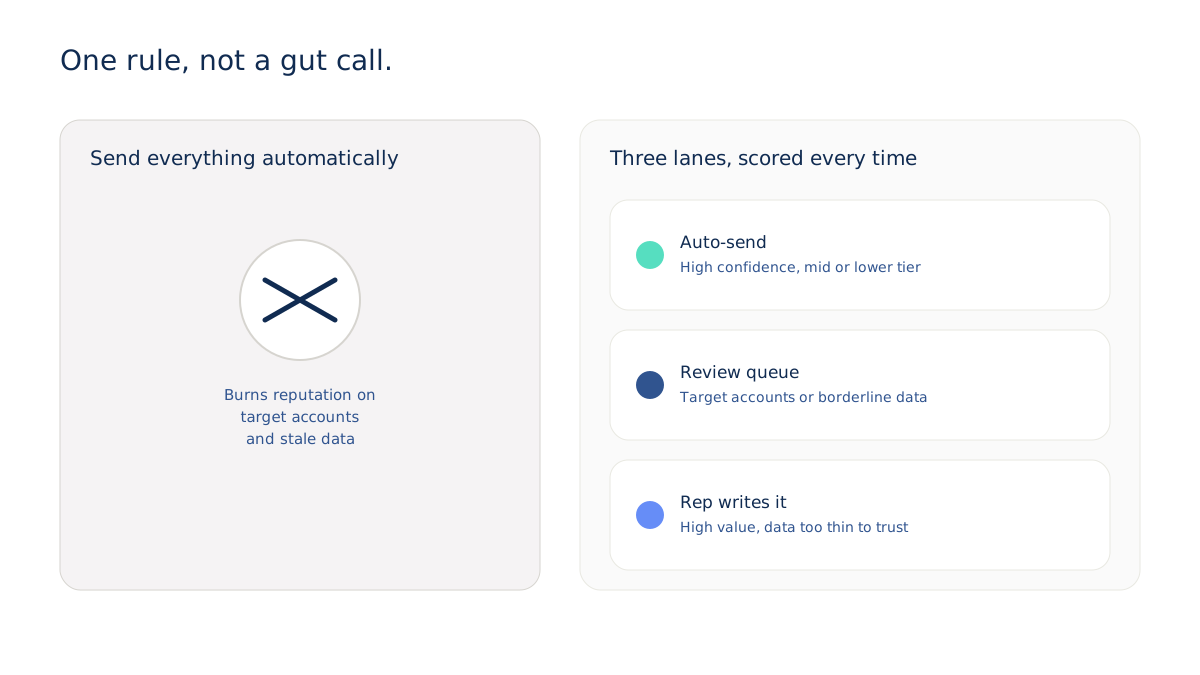
Auto-send handles the safe, high-confidence volume; a review queue catches target accounts and borderline data; a rep writes from scratch when the data is too thin to trust on a big account.
Ask Vibe Prospecting in chat and get company details, contact info, and 80+ signal types back in one pass, so your rule reads clean tier-plus-confidence data instead of stitching two or three tools together.
Most sends a reviewer flags turn out to be bad data, not a real judgment call. Explorium's underlying company match accuracy sits above 97.8%, which quietly shrinks the queue before a human ever opens it.
Audit whatever goes out on auto-send every week: a small random sample plus every flagged reply. Widen a lane only after approval rate, edit rate, and reply rate all hold for four straight weeks.
Start free, no sales call, and route your first week of sends through the three lanes before you commit to wider automation.
Reps using AI tools now send somewhere around 7,400 outbound messages a year, up from a roughly 1,150-send human baseline not long ago. At that volume, "a person reads every message before it goes out" stopped being realistic months ago, and "nothing gets reviewed" is how you burn a target account's trust in a single bad week. Human-in-the-loop AI outbound solves this with a rule, not a habit: every send gets scored and routed into exactly one lane before it reaches a prospect, so a human only sees the sends that actually carry judgment risk.
This guide builds that rule end to end: why treating every send the same breaks down, the two inputs that should decide a send's lane, how to set up three lanes instead of one big queue, and which numbers tell you it's safe to let the machine handle more.
Why "Review Everything" or "Review Nothing" Both Break at Scale
Full manual review cannot keep pace with AI-generated volume, and full automation treats a strategic account the same as a self-serve signup. Neither extreme survives contact with real pipeline.
What Breaks When Nothing Gets Reviewed
An agent sends against every matched signal without weighing which ones are worth a message, and a domain's sender reputation takes the hit within weeks.
Outdated contact or company details go out with full confidence, so the prospect reads it as a mistake rather than a relevant note.
Nobody catches the tone or hesitation in a reply the way a rep listening on a call would.
What a Three-Lane Rule Fixes
Reps spend their attention on tone and timing calls, not on catching a wrong title or a dead inbox.
Accounts that matter most get a human read before anything sends; low-risk, high-confidence volume goes out on its own.
How much gets automated moves up or down based on what you actually measure, not a one-time guess.
The Only Two Questions That Should Decide If a Send Needs a Human
A send needs a human when the account matters enough, or the data behind it is shaky enough, that getting it wrong actually costs you something. Everything else can run on its own.
The Routing Matrix
Data Confidence
Account Value
Where It Routes
Low, any tier
Any
Never auto-send on shaky data
High
Low (SMB, self-serve)
Auto-send
High
Mid-market
Auto-send, sampled weekly
Low
High (target, enterprise)
Rep writes it, this is a data gap
High
High
Review queue, always a human read
How a company gets matched to the right record in the first place sets how often sends land in that low-confidence row to begin with; a weak match rate quietly pushes more volume into human review than the rule was ever meant to carry, read more on what pulling together and cleaning up company data actually involves.
Build Three Lanes, Not One Big Queue
A tiered model is three fixed lanes, each send landing in exactly one, re-scored every single time rather than graduated once and left alone.
The Three Lanes
Auto-send: clean data, mid-or-lower account value, fires with no human touch.
Review queue: target account or shaky confidence, a person clicks send, edit, or skip.
Rep-written: high-value account with data too thin to trust, the rep writes it from the raw facts.
A rule pulling account value from one place and data confidence from another drifts out of sync fast, timestamps stop matching and the routing decision gets made on stale inputs. Pulling both off a single source keeps tier and confidence lined up at the moment a send actually fires.
Score Confidence Before You Trust the Send
Confidence is a score built from how certain the match is, how recent the record is, and how many sources agree, not a single verified-or-not flag. A record backed by dozens of agreeing sources and a recent update is worth more than a single-source match pulled from an old list.
What Should Actually Move the Score
How confident the system is that this is the right company, production-grade matching sits north of 97.8%.
How recently the title, company, or contact field was last touched.
How many independent sources agree on the same facts.
Whether there's an active reason to reach out right now, not just a static profile field sitting there.
"Reps I talk to don't want AI replacing judgment, they want it clearing the data noise so the judgment calls are the only thing left on their plate." - RevOps Lead, Series B SaaS, via LinkedIn
Bad Data, Not Bad Judgment, Is What Floods a Queue
When there's no real confidence score behind a send, every single one looks equally risky, so a reviewer spends their day fixing wrong titles and dead addresses instead of weighing tone. Fix the match accuracy at the data layer and the queue shrinks down to the sends that genuinely need a judgment call.
What Goes in Each Lane
Get the three lanes right and a reviewer only ever sees real judgment calls; mix them up and the queue fills with data problems dressed up as decisions.
Auto-Send Candidates
Mid-market and self-serve accounts sitting above your confidence bar.
Standard sequence steps with no specific claim about the prospect's situation.
Sends where a wrong field is a minor miss, not a relationship-ending one.
Review Queue Candidates
Named target or enterprise accounts, regardless of how confident the data looks.
Anything that references a specific signal, like a funding round or a new hire.
First-touch messages into a brand-new account, where a bad first impression costs the most.
Building your own routing rule? Ask Vibe Prospecting for account tier and a confidence score in the same chat. Start free
Rep-Written Candidates
High-value accounts where the confidence score falls below your threshold.
Accounts carrying conflicting signals, like an unconfirmed title change.
Any account flagged from a past audit for producing a send that landed badly.
Keep Your Review Queue From Becoming a Rubber Stamp
A queue turns into rubber-stamping the moment its volume outgrows what one rep can actually read in a day; the fix is a daily cap, not a bigger reviewer team.
How Queues Quietly Fail
Volume outpaces reading capacity, so reps click approve without really looking.
Data errors and genuine judgment calls sit in the same queue, splitting attention on the wrong problem.
Nobody reports back to the reviewer on whether their edits actually changed an outcome.
What Actually Holds Under Volume
Cap how many sends hit one reviewer per day; route the overflow to rep-written instead of skipping review entirely.
Raise the confidence bar so data-error sends never reach the queue in the first place.
Send the reviewer their own edit rate weekly, so they can see which calls they're genuinely changing.
Audit the Auto Lane Every Week, Not Just When Something Breaks
Check the auto-send lane weekly with a random sample plus every flagged reply, before a scoring drift has a chance to compound across thousands of sends.
The Weekly Audit Loop
Pull a random 2-5% slice of the week's auto-sent messages.
Pull every single auto-sent message tied to a negative or flagged reply.
Score each one for accuracy and relevance.
Feed whatever broke back into the confidence threshold, not just that one account.
The Three Numbers That Tell You It's Safe to Widen Automation
Widen a tier's automation only once approval rate holds above 90%, edit rate stays under 10%, and reply rate matches the queue's own baseline, all for four straight weeks. One of those slipping means hold steady or pull back, never push forward.
The Tuning Metrics
Metric
Tighten If
Widen If
Reply rate by tier
Drops 15%+ below the queue baseline
Meets or beats the queue baseline
Edit rate, auto-lane audit
Climbs above 20%
Stays below 10%
Approval rate, queue
Falls below 75% in any two-week span
Holds above 90% for four weeks
Ask Vibe Prospecting for the Two Numbers Your Rule Needs
Vibe Prospecting answers account value and data confidence in one chat message, premium business data pulled together, cleaned up, and ready to use, so the rule above runs on one clean pass instead of three stitched-together tools.
What One Chat Gets You
Company details and contact info pulled from premium sources in the same ask, instead of two separate lookups.
18 categories and 80+ types of recent company activity feed the account-value half of your rule.
Matches checked against 50+ underlying sources, the kind of depth a confidence score actually needs instead of one unverified field.
Built for the Weekly Audit, Not Just the First Send
A weekly audit means pulling thousands of auto-sent accounts back through the system at once, not looking records up one at a time. Vibe Prospecting is built to handle that kind of bulk ask without choking, which matters more the longer your auto-send lane runs.
Free to Start, Affordable to Run
A free account with no sales call, so you can pilot the three-lane model before spending anything.
One shared pool of credits across every kind of lookup, instead of paying a different rate per data type.
A preview of sample records and the expected cost before anything gets charged.
Connect It From ChatGPT or Claude
Add Vibe Prospecting from the Claude Connectors Directory or the ChatGPT plugin directory for a one-click setup. Teams running the Vibe Prospecting Plugin in Claude Code can wire the same data straight into a scheduled routing job instead of asking in chat each time.
For teams weighing a single-source tool against something broader, see the side-by-side comparison with Coresignal on why narrower data tends to push more volume into that low-confidence row.
Get Your First Week of Routing Running
Start small: a free account, a sample pull, and a one-week test batch before anything touches live sends at scale.
Step 1: Open a free account and connect Vibe Prospecting from the Claude Connectors Directory or the ChatGPT plugin directory.
Step 2: Pull a sample of pipeline accounts and score each one for data confidence.
Step 3: Set your two-input rule, account tier plus confidence threshold, and route a one-week test batch through it.
Step 4: Run the weekly audit on whatever went out automatically, and log approval, edit, and reply rate by tier.
Step 5: After four straight weeks of clean metrics, widen or tighten each tier's threshold based on what you measured, not a hunch.
The Short Version
Human-in-the-loop AI outbound separates two questions that used to get mushed into one: how much does this account matter, and how much should I trust what I know about it. Vibe Prospecting answers the second one directly, in one chat, with enough scale to audit whatever goes out automatically every week, free to start before you spend anything. That's the data layer a 2026 outbound rule should run on.
Ready to route your first week of sends through three lanes instead of one inbox? Try Vibe Prospecting free