


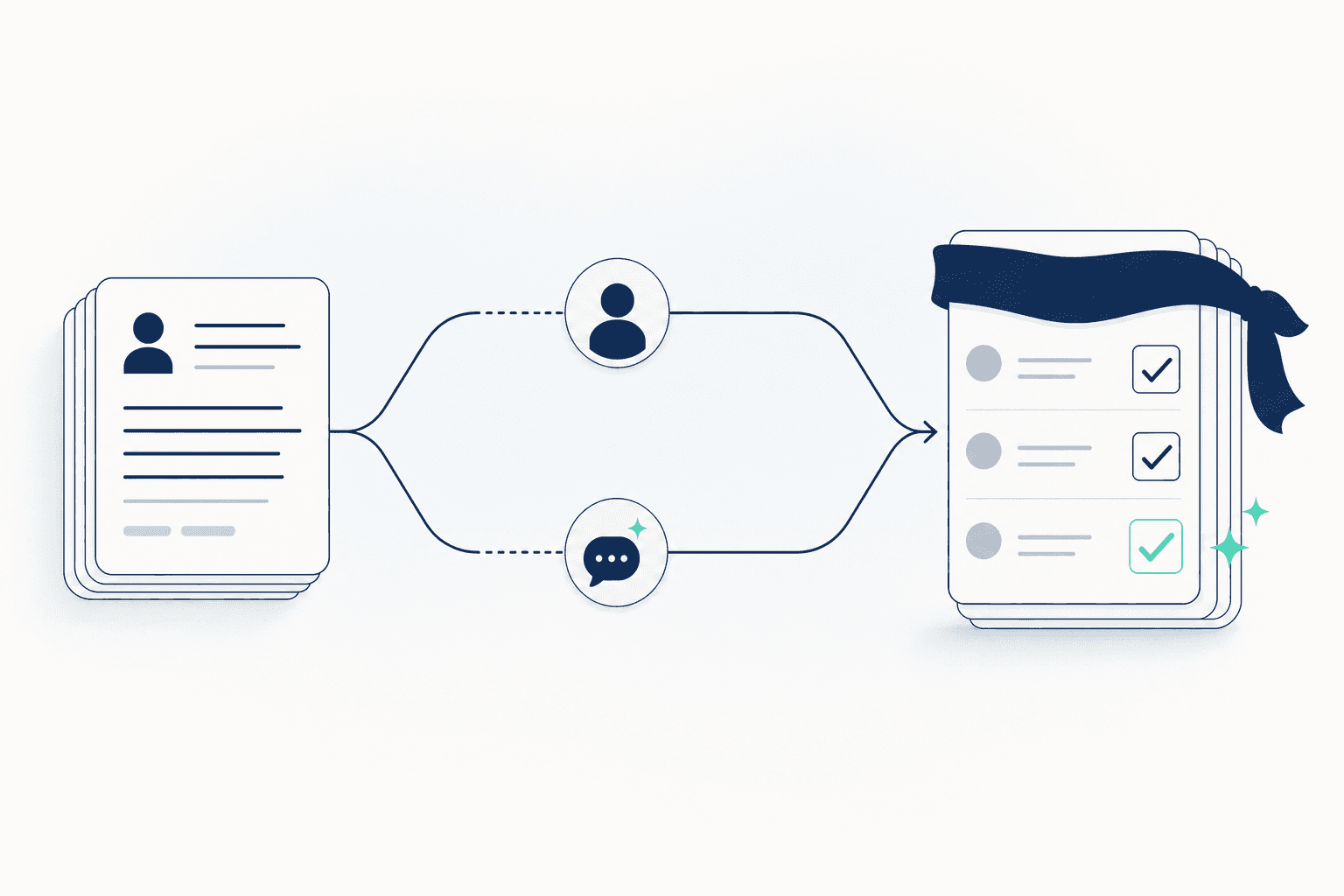
Somebody at your company is about to sign an annual AI SDR contract based on a great demo and two weeks of cherry picked screenshots. Before that happens, run an AI SDR blind test: give the agent and your human team the exact same prospect list, hide who wrote what, and score every stage of the pipeline with raters who cannot tell the two sides apart. It is the only test whose result you can trust, and it is far easier to set up than most teams assume.
The alternative is what usually happens instead. Around half of AI SDR pilots get shut down inside 90 days, and the autopsy rarely blames the real culprit. Sometimes a working agent gets fired because nobody ever measured the humans it was supposed to beat. Sometimes a broken one gets scaled because it was quietly handed a better prospect list. This guide walks through the whole protocol, from baseline to verdict.
Why Half of AI SDR Pilots Die Inside 90 Days
Most pilots change three things at once, then credit or blame the agent for whatever moved. The list changed, the timing changed, and the decision maker changed, so the result says nothing about any one of them. The first wave of AI SDRs pushed 6.4x the sending volume of a human team and still landed a 1.3% positive reply rate while humans held 2.1%, which tells you volume was never the thing worth testing.
The Four Ways a Pilot Lies to You
- It got a better list. The agent worked fresher records than the humans pulled from the CRM, so the data won the test and the agent took the credit.
- It got more swings. A headline like "most of our meetings came from the AI" often just means the agent touched six times as many prospects.
- It had a babysitter. A human approved every message during the pilot. Production removes that person, and quality falls exactly when volume rises.
- It had no opponent. Nobody measured the human team first, so "better" was a feeling, not a number.
A GTM leader at Instantly lived this one publicly: an agent was credited with up to 69% of the company's outbound meetings, and his own postmortem concluded that the obvious explanation, that the AI simply outperformed the humans, turned out to be the wrong one.
Measure Your Human Team First (Most Companies Never Do)
Spend 30 days recording how your human team actually performs across six stages before the agent sends a single message. Skip this and the pilot can only end in anecdotes. It also cuts the other way: an agent that genuinely outperforms will look average on a dashboard if nobody ever separated positive replies from "please remove me" replies in the human numbers.
The Six Numbers to Capture
| Stage | What to record | Where it comes from |
|---|---|---|
| Reply quality | Share of replies that are genuinely positive | Classify every reply by hand; 2.1% positive is the published human benchmark |
| Meeting show rate | Share of booked meetings that actually happen | Calendar records across the full 30 days |
| Qualification | Share of booked meetings your AEs accept as real | An AE verdict logged within 48 hours of each meeting |
| Contact accuracy | Bounce rate and share of right role contacts | Delivery logs plus a manual role check on 100 contacts |
| Account selection | Share of worked accounts that truly fit your ideal customer profile | An audit of 100 accounts against the written profile |
| Cost | Cost per AE accepted meeting | Loaded team cost divided by accepted meetings |
The Blind Test Setup: Same List, Same Month, Hidden Authors
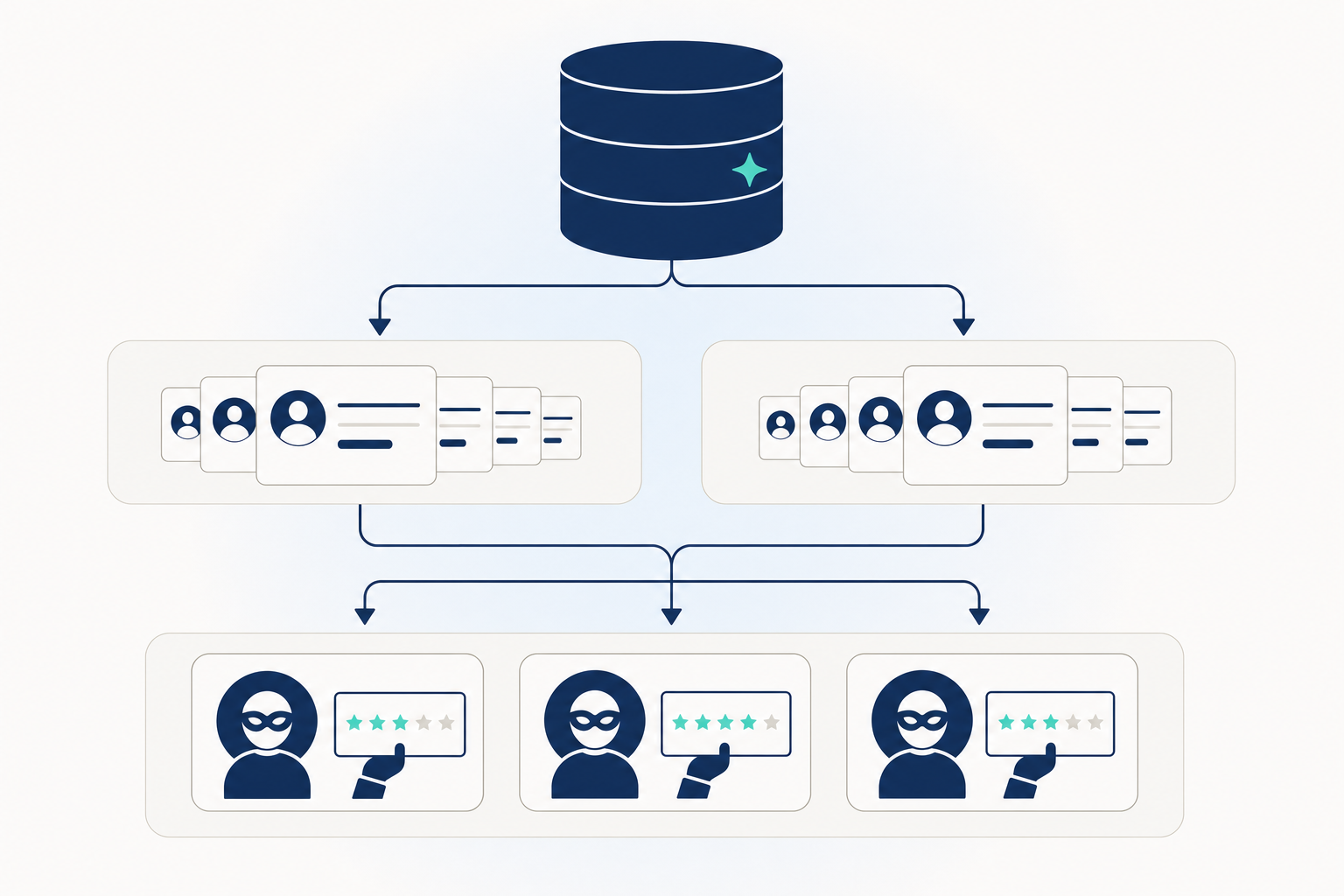
Build one prospect list of 500 to 1,000 people in a single pull, randomize a 50/50 split, run both sides for 30 days on the same segment and the same offer, and have 2 or 3 raters score outputs without knowing which side produced them. One sales leader who ran exactly this found the agent matched her team's qualification calls about 90% of the time, a verdict she could defend precisely because the rating was blind. Anthropic's guide to agent evals gives the same structure a formal name: each stage is a task, each prospect is a trial, each blinded rater is a grader.
Setup Rules That Keep the Test Honest
- Freeze everything except the decision maker: same offer, same sending schedule, same mail infrastructure on both sides.
- Log every account pick, contact pick, qualify or skip call, and message from both sides as they happen.
- Strip signatures, names, and send metadata before rating. Formatting quirks give away the author faster than content does.
- Score messages 1 to 5 on relevance, accuracy, and specificity against a written rubric. Style taste does not count.
- For qualification, check whether the rater lands on the same qualify or skip call the side made.
Score Every Stage, Not Just Meetings Booked
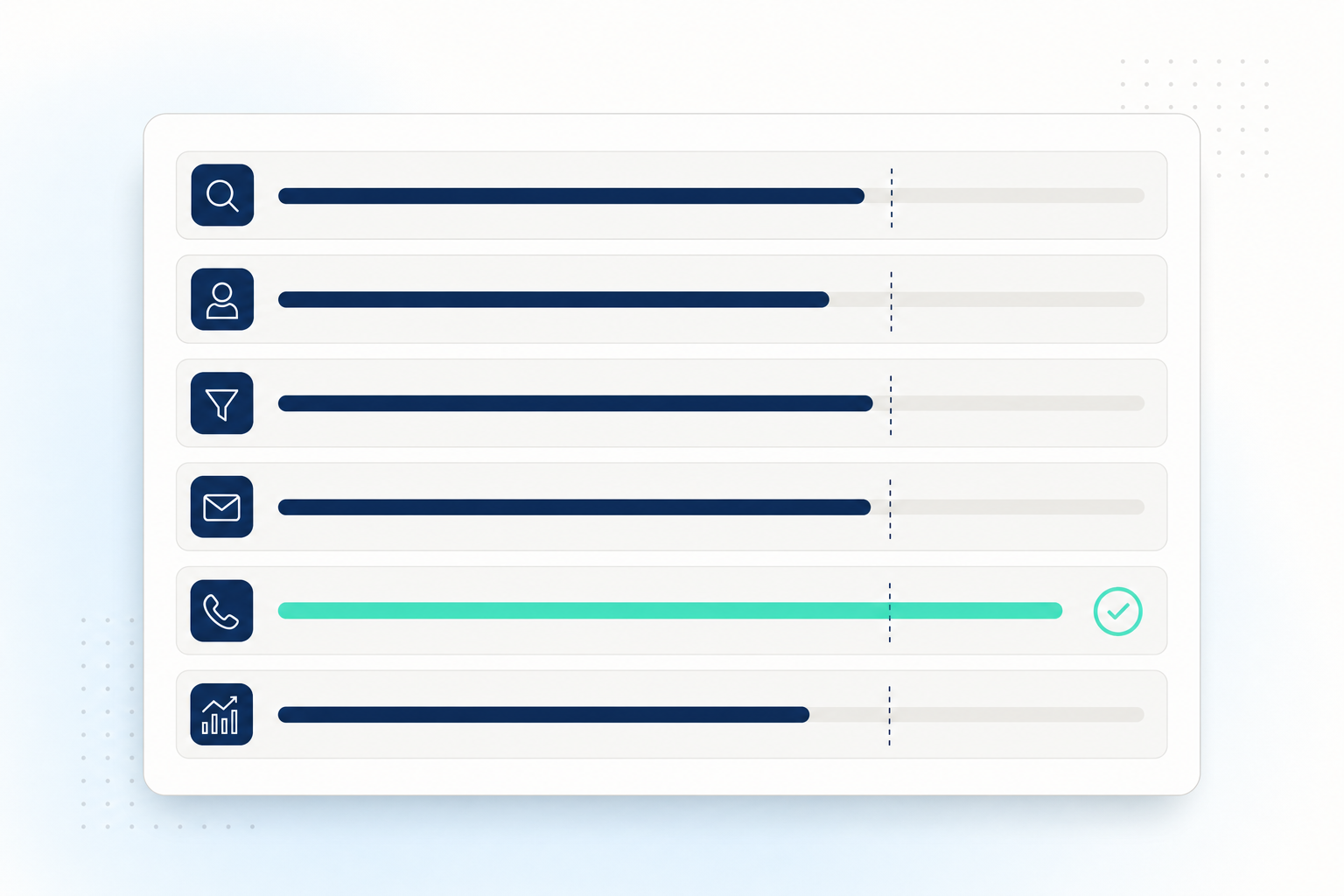
Write down a numeric pass bar for each stage before the test starts, because a bar chosen after the results arrive always gets cleared. One cautionary pilot booked 47 meetings in six weeks and turned exactly 4 of them into opportunities. Meetings booked, total replies, and raw activity are the three numbers that flatter a failing agent.
The Pass Bars
| Stage | Pass bar | Who judges it |
|---|---|---|
| Qualification agreement | Agrees with rater consensus 85%+ of the time | Blinded raters |
| Reply quality | Positive reply rate at or above your human baseline | Reply classification |
| Sender health | Sender score drops fewer than 5 points over the pilot | Postmaster tools |
| Contact accuracy | Bounces under 2%, right role contacts 90%+ | Delivery logs |
| Meeting show rate | Within 10% of the human side | Calendar records |
| Account selection | Profile fit at or above the human side | Blind account audit |
One Data Source for Both Teams, or the Test Is Already Broken
If the agent pulls prospects from a shiny new vendor while your humans work whatever sits in the CRM, you are comparing two databases, not a person and an agent. Bad contact records do their damage quietly: one documented pilot watched its sender score slide from 95 to 72 while everyone argued about the model. The fix is boring and absolute. Both sides draw company details, contact records, and buying signals from one place, and you check completeness on both halves of the split before day one. If you are choosing that place, do the side by side provider comparison before the pilot, and read up on what good data enrichment should add to a record.
The Tells That Your Inputs Diverged
- One side bounces noticeably more, which drags every later number down before anyone looks at the messages.
- "In market account" means different things on each side because the two sources define buying signals differently.
- The delta between sides tracks record freshness, not decision quality, and nobody can prove otherwise afterward.
"Instead of connecting to multiple data sources and APIs, we only require one connection, Explorium." - Mirit H., Sales Ops, Mid-Market (Powered by Explorium Enterprise Business Data)
Pull the Whole Test Cohort in One Chat Message
This is where Vibe Prospecting earns its place in the protocol: you build the shared cohort by asking for it in plain language, preview it before paying, and get the full list in one pull instead of a stitched together patchwork. Open Claude or ChatGPT with Vibe Prospecting connected and type something like:
- "Build me a list of 800 heads of sales and heads of growth at US software companies with 50 to 500 employees that raised funding in the last 12 months. Show me 5 sample records and the cost before you build the full list."
Three things about that flow matter for a blind test. The preview step returns 5 representative records plus a credit estimate before anything is charged, so you can audit input quality before day one and no bad record ever gets blamed on the agent. The data behind it covers 150M+ companies and 800M+ professional profiles from 50+ sources with 97.8%+ company match accuracy, plus 18 categories of buying signals so "in market" means one thing across the whole test. And because up to 1,000 records per call are processed server side at 100 QPS, the standard cohort arrives in one pull; connections that load every record into the chat context tap out at 20 to 100 prospects and silently shrink the AI side's half mid test.
Connect It in One Click
Add Vibe Prospecting from the Claude or ChatGPT Connectors Directory. Teams wiring it into a Claude Code agent stack should use the Vibe Prospecting Plugin, or the manual configuration below.

